| The South Carolina Department of Natural Resources will release hatchery-reared southern flounder into state estuaries for the first time today, March 13, marking a major milestone in the development of a new stock-enhancement program. The initial release will include approximately 10,000 juvenile flounder—about 1 inch long and 45 days old—with additional stockings planned at several size classes throughout 2026. Work on the program began in 2021 and involved collaboration among SCDNR research teams in mariculture, inshore fisheries, and population genetics, along with partners from Texas Parks and Wildlife Department, University of Texas at Austin, North Carolina State University, and the Alabama Department of Conservation and Natural Resources. Scientists evaluated years of fisheries survey data, expanded monitoring in northern estuaries, and developed new hatchery systems tailored to the unique biology of bottom-dwelling flatfish. A central component of the effort is genetics. Researchers have developed DNA microsatellite markers that allow scientists to distinguish hatchery-reared fish from wild fish and track how stocked individuals contribute to different life stages of the natural population. Biologically, southern flounder from North Carolina through Florida are considered a single unit stock. In North Carolina, the species is classified as depleted based on the most recent stock assessment, which uses data through 2017. Because these populations are interconnected, the success or limitations of South Carolina’s stocking efforts could provide valuable insight for fisheries management and potential recovery strategies in North Carolina. |
The Catch and Release Option
Although we are prohibited from catching flounder most of the year and trout early in the year due to cold-stun regulations, it doesn’t mean that we won’t hook up with them while we are out fishing for other species. Often, we are also faced with releasing fish that are too short or even too long. And if we are extremely lucky, we may catch a fish that exceeds our bag limit – wouldn’t that be nice!
Unfortunately, many uninformed anglers manhandle a catch before carelessly tossing it back into the water. That’s wasteful! To truly give the fish a fighting chance, take the time to learn and use the proper catch-photo-release method, or as it is commonly called, the CPR method
After years of research, conservationists have developed the best method to release a fish. Follow these rules for a safe and effective release.
- WORK FAST
Returning the fish to the water as quickly as possible is key to increasing survival. The fish’s slime coat protects it from parasites. If you have to handle a fish, wet your hands first. A rubber-coated landing net protects the fish’s slime and prevents tangled lures and lines.
- WET YOUR HANDS AND KEEP FISH HORIZONTAL
Ideally, keep the fish in the water. If lifting the fish, do not hang it vertically by the jaw. Fish swim horizontally; hanging vertically strains the fish’s organs. Support the weight.
- TAKE THE PHOTO OP QUICKLY
It is best to take a photo of the fish without removing from the water, but if you do need to support your bragging rights or need to verify the catch for the fishing tournament, have your camera, bump board or other measurement device handy.
- HOOKS
Use circle hooks or barbless hooks. Circle hooks are designed to stick in the jaw greater than 90 percent of the time. Not only does this reduce foul or deep hooking, but circle hooks are easier to remove. No need to rear back and set the hook. Simply apply drag pressure and the hook finds its place.
- USE DEHOOKING TOOLS
Use the right tool. Most anglers use pliers to remove a hook, but a special tool, called a dehooker, removes the hook without touching the fish.
- EVEN RELEASE INJURED FISH
Return an injured fish to the water, even if it likely won’t survive. A bleeding or deep-hooked fish still has a better chance of recovering in the water than on the frying pan. Even if it doesn’t survive, the fish could benefit other wildlife. An added bonus is that you won’t get cited for having an illegal fish.
- REVIVE TIRED FISH
A common mistake is rocking the fish back and forth to force water over the gills. Fish don’t swim backwards. Instead, move the fish in a figure-8 pattern or walk it along the bank.
- CUT OFF DEEP SET HOOKS
If the hook is too deep to retrieve, cut the line as short as possible. Especially important for toothy fish. Yanking the hook or aggressively removing it can cause injury. Most hooks rust quickly. Barbless hooks can often be disgorged.
In order to maintain our fisheries in as good a condition as possible, released fish need to be returned to the water in as safe and healthy condition as possible.
American Shad Fishing on the Cape Fear River
https://podcast.show/ncwrc-better-fishing/episode/152777364/
March is the month that shad start showing up in the coastal rivers of North Carolina, from the Cape Fear to the Roanoke.
South Carolina setting the Precedent – SCDNR to Release Hatchery-Grown Southern Flounder into State Estuaries for the First Time
| MEDIA ADVISORY FOR IMMEDIATE RELEASE: MARCH 6, 2026 MURRELLS INLET, S.C. — The South Carolina Department of Natural Resources (SCDNR) will mark a historic milestone in marine conservation on Friday, March 13, 2026, as the agency releases hatchery-grown Southern flounder into South Carolina estuaries for the first time. The release represents the culmination of four years of pioneering research by SCDNR scientists that established the first southern flounder stock enhancement program along the Atlantic coast. The program reflects a science-driven approach to strengthening coastal fisheries and supporting the long-term sustainability of the species in South Carolina waters. A public flounder release event will be held at the Murrells Inlet Boat Launch to celebrate the milestone and highlight the collaborative effort among researchers, recreational anglers, and state leaders who helped support the initiative. Interview opportunities will be available with: Dr. Tom Mullikin, Director, SCDNR Blaik Keppler, Deputy Director, SCDNR Marine Resources Division Legislative guests and partners supporting the program Media are invited to attend and capture footage of hatchery-grown southern flounder being released into the estuary. WHAT: Public release of hatchery-grown southern flounder WHO: SCDNR leadership, legislative guests, and fisheries scientists WHEN: Friday, March 13, 2026 | 1:00 p.m. WHERE: Murrells Inlet Boat Launch: 4139 US-17 BUS, Murrells Inlet, SC 29576 VISUALS: Live release of hatchery-grown southern flounder; scientists and agency leadership on site; interview opportunities with agency officials and legislative guests Members of the media planning to attend are encouraged to arrive shortly before the event start time. Cheyenne Twilley Chief of Education, Outreach, and Information South Carolina Department of Natural Resources TwilleyC@dnr.sc.gov 260 D. Epting Lane, West Columbia, SC 29172 |
For you Mountain Trout Enthusiasts – Hazel Creek: a unique off-the-grid Adventure

Courtesy Hunter Cook Columnist
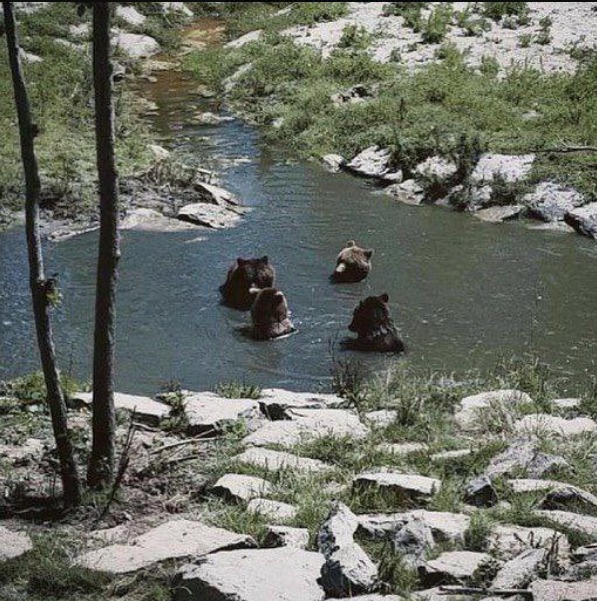
Off the Grid Adventure
https://www.carolinasportsman.com/columns/off-the-grid/hazel-creek-a-unique-off-the-grid-adventure/
Recent Coastal Insights
͏ ͏ ͏ ͏ ͏ ͏ ͏ ͏ ͏ ͏ ͏ ͏ ͏ ͏ ͏ ͏ ͏ ͏ ͏ ͏ ͏ ͏ ͏ ͏ ͏ ͏ ͏ ͏ ͏ ͏ ͏ ͏
February 13, 2026  Good morning, and welcome to Coastal Insights—our foundation’s weekly publication delivering reliable updates on the key developments shaping North Carolina’s fisheries. Introducing the Oyster Series Over the coming weeks, we’ll take a closer look at one of North Carolina’s most important and most misunderstood coastal species: the eastern oyster. Good morning, and welcome to Coastal Insights—our foundation’s weekly publication delivering reliable updates on the key developments shaping North Carolina’s fisheries. Introducing the Oyster Series Over the coming weeks, we’ll take a closer look at one of North Carolina’s most important and most misunderstood coastal species: the eastern oyster.  Oysters have shaped our estuaries for centuries. They’ve supported working waterfronts, filtered our waters, and built reefs that shelter fish and crabs. Today, they sit at the center of important conversations about coastal economies, water quality, public trust waters, and the future of our fisheries. This series will explore the full story. We’ll examine the remarkable life cycle of an oyster, including some surprising biological traits few people know about. We’ll look at the differences between wild harvest and cultured production, share the latest economic trends shaping the industry in North Carolina and across the country, and discuss why water quality remains inseparable from oyster success. Whether you harvest them, grow them, study them, eat them, or simply value clean water and thriving estuaries, oysters connect us all. Part 1: Nature’s Estuary Engineer Few species tell the story of our coast like the oyster. Once so abundant that reefs were navigational hazards, oysters helped shape North Carolina’s estuaries and the communities built around them. They fed families, sustained working waterfronts, and formed the backbone of coastal economies. Historic oyster reefs once spanned tens of thousands of acres throughout North Carolina’s estuaries. Modern mapping has identified roughly 22,000 acres of shell bottom in coastal waters, a tangible reminder of what was and what restoration hopes to rebuild. Over time, habitat loss, water quality challenges, and intense harvest pressure dramatically reduced wild oyster populations. Yet today, oysters are at the center of one of the most hopeful stories in coastal restoration and sustainable seafood. Oysters do more than live in estuaries; they build them. Oysters have shaped our estuaries for centuries. They’ve supported working waterfronts, filtered our waters, and built reefs that shelter fish and crabs. Today, they sit at the center of important conversations about coastal economies, water quality, public trust waters, and the future of our fisheries. This series will explore the full story. We’ll examine the remarkable life cycle of an oyster, including some surprising biological traits few people know about. We’ll look at the differences between wild harvest and cultured production, share the latest economic trends shaping the industry in North Carolina and across the country, and discuss why water quality remains inseparable from oyster success. Whether you harvest them, grow them, study them, eat them, or simply value clean water and thriving estuaries, oysters connect us all. Part 1: Nature’s Estuary Engineer Few species tell the story of our coast like the oyster. Once so abundant that reefs were navigational hazards, oysters helped shape North Carolina’s estuaries and the communities built around them. They fed families, sustained working waterfronts, and formed the backbone of coastal economies. Historic oyster reefs once spanned tens of thousands of acres throughout North Carolina’s estuaries. Modern mapping has identified roughly 22,000 acres of shell bottom in coastal waters, a tangible reminder of what was and what restoration hopes to rebuild. Over time, habitat loss, water quality challenges, and intense harvest pressure dramatically reduced wild oyster populations. Yet today, oysters are at the center of one of the most hopeful stories in coastal restoration and sustainable seafood. Oysters do more than live in estuaries; they build them.  A single adult oyster can filter up to 50 gallons of water per day under ideal conditions, removing excess nutrients and suspended particles. Over time, clusters of oysters form reefs that create hard structure in otherwise soft-bottom waters. These reefs shelter juvenile fish and crabs, support shrimp populations, and help buffer shorelines from wave energy. At the same time, consumer demand for oysters continues to grow nationwide. Oyster mariculture—the cultivation of oysters in coastal waters—is expanding in nearly every U.S. region. Cultured production now represents the most valuable sector of marine aquaculture in the country. A single adult oyster can filter up to 50 gallons of water per day under ideal conditions, removing excess nutrients and suspended particles. Over time, clusters of oysters form reefs that create hard structure in otherwise soft-bottom waters. These reefs shelter juvenile fish and crabs, support shrimp populations, and help buffer shorelines from wave energy. At the same time, consumer demand for oysters continues to grow nationwide. Oyster mariculture—the cultivation of oysters in coastal waters—is expanding in nearly every U.S. region. Cultured production now represents the most valuable sector of marine aquaculture in the country.  Here in North Carolina, both public reef harvest and private lease production play important roles. Wild oysters connect us to heritage and tradition. Cultured oysters help meet rising demand and provide economic stability for coastal communities. Together, they generated $8.15 million in dockside sales in 2024, the highest value on record. In this series, we’ll explore how oysters grow, how they support clean water, how cultured production works, and how the oyster economy is transforming both nationally and here at home. Oysters are more than seafood on ice. They are living infrastructure, and one of the clearest examples of how conservation and coastal livelihoods can move forward together. Next week: Wild harvest and cultured oysters, two paths to the same plate. Hooked on a Feeling: Inside the Fish Heart Valentine’s Day isn’t just for humans. It’s also a chance to marvel at the diversity of hearts throughout the animal kingdom, especially beneath the waves. Here in North Carolina, both public reef harvest and private lease production play important roles. Wild oysters connect us to heritage and tradition. Cultured oysters help meet rising demand and provide economic stability for coastal communities. Together, they generated $8.15 million in dockside sales in 2024, the highest value on record. In this series, we’ll explore how oysters grow, how they support clean water, how cultured production works, and how the oyster economy is transforming both nationally and here at home. Oysters are more than seafood on ice. They are living infrastructure, and one of the clearest examples of how conservation and coastal livelihoods can move forward together. Next week: Wild harvest and cultured oysters, two paths to the same plate. Hooked on a Feeling: Inside the Fish Heart Valentine’s Day isn’t just for humans. It’s also a chance to marvel at the diversity of hearts throughout the animal kingdom, especially beneath the waves.  Fish hearts aren’t simply slower versions of ours; they’re finely tuned engines shaped by cold water, long migrations, sudden bursts of speed, and life in low-oxygen environments. Unlike mammals, most fish have a two-chambered heart—one atrium and one ventricle—arranged in a loop. Blood flows from the heart to the gills to collect oxygen, then out to the body and back again. But simple doesn’t mean boring. Off North Carolina’s coast, bluefin tuna move like living torpedoes. Built for endurance and speed, they have large, muscular hearts capable of powerful contractions. In colder waters, their heart rates can climb toward 200 beats per minute to meet the oxygen demands of long migrations and explosive chases. Here’s the twist: bluefin are partially warm-bodied, keeping parts of their muscles warmer than the surrounding water while their hearts remain at ambient temperature. Even so, their cardiovascular systems perform efficiently from chilly Cape Hatteras waters to warmer offshore currents. Closer to shore, species such as flounder, red drum, and striped bass live differently. Their heart rates are slower, rising when feeding or escaping predators. Cold winter waters can slow rhythms dramatically, which is one reason why sudden temperature swings can stress coastal fish species. Some marine creatures take things even further. The deep-sea hagfish have a primary heart plus several accessory pumping structures that move blood through their low-pressure circulatory system. Octopuses have three hearts—two for the gills, one for the body. Heart design tells a story of habitat, temperature, and survival. So while candy and flowers steal the spotlight this Valentine’s Day, remember, some of the most remarkable hearts are beating beyond the shoreline. Fish hearts aren’t simply slower versions of ours; they’re finely tuned engines shaped by cold water, long migrations, sudden bursts of speed, and life in low-oxygen environments. Unlike mammals, most fish have a two-chambered heart—one atrium and one ventricle—arranged in a loop. Blood flows from the heart to the gills to collect oxygen, then out to the body and back again. But simple doesn’t mean boring. Off North Carolina’s coast, bluefin tuna move like living torpedoes. Built for endurance and speed, they have large, muscular hearts capable of powerful contractions. In colder waters, their heart rates can climb toward 200 beats per minute to meet the oxygen demands of long migrations and explosive chases. Here’s the twist: bluefin are partially warm-bodied, keeping parts of their muscles warmer than the surrounding water while their hearts remain at ambient temperature. Even so, their cardiovascular systems perform efficiently from chilly Cape Hatteras waters to warmer offshore currents. Closer to shore, species such as flounder, red drum, and striped bass live differently. Their heart rates are slower, rising when feeding or escaping predators. Cold winter waters can slow rhythms dramatically, which is one reason why sudden temperature swings can stress coastal fish species. Some marine creatures take things even further. The deep-sea hagfish have a primary heart plus several accessory pumping structures that move blood through their low-pressure circulatory system. Octopuses have three hearts—two for the gills, one for the body. Heart design tells a story of habitat, temperature, and survival. So while candy and flowers steal the spotlight this Valentine’s Day, remember, some of the most remarkable hearts are beating beyond the shoreline.   The North Carolina Marine & Estuary Foundation, Inc. is a 501 (c)(3) non-profit organization (EIN 83-0893015). Contributions to the North Carolina Marine & Estuary Foundation are tax-deductible to the extent allowed by law. You can update your preferences or unsubscribe. The North Carolina Marine & Estuary Foundation, Inc. is a 501 (c)(3) non-profit organization (EIN 83-0893015). Contributions to the North Carolina Marine & Estuary Foundation are tax-deductible to the extent allowed by law. You can update your preferences or unsubscribe. |


You must be logged in to post a comment.