Although I usually refrain from political issues, its the fishing issues that concern me and probably ls the most concern to our members.
In the recent September 17th issue of The Brunswock Beacon Coluimnist Tom Campbell wrote “Time to fix our ‘fishy’ regulations”. It is a great article and, yes, if you hurry, copies are still available on the newsstands!
Here are a couple of key points that I found interesting:
- NC has 322 miles of ocean shoreline and over 12,000 miles of rivers, bays, sounds and wetlands -the second largest in the U.S.
- Until the last quarter century NC fisheries were so abundant that overharvest was seldom a concern.
So what happened? Basically, commercial fishing started putting enormous pressure on the coastal fisheries and fueled a blame game between commercial fishing and the growing recreational sport fishing interests.
In the 1960’s the Division of Marine Fisheries (DMF) evolved within the umbrella of the Department of Environmental Quality (DEQ) and led to the establishment of the Marine Fisheries Commission (MFC). The mandate of thse agencies is to preserve our Constitutional right to fish and harvest fish and to keep our fisheries from harm and destuction. But with all of this bueaucracy and all of these acronyms is it any wonder that recent evidence shows that not one of our state’s 13 ‘managed’ coastal fisheries is viable in the long-term.
Now what? As a result of a six-year law suit filed against the state by citizens and supported by the NC Coastal Carolina Association, it was concluded that the state has completely failed to meet the long-term vialbility standard needed to preserve our fisheries. The court directed the parties to meet, to prepare reports, and to schedule further proceedings. There were no new restrictions placed on over-fishing, no changes in policy, and no actions taken that stop further damage to our fisheries.
Our state still has the most lax regulations on the entire East Coast and that”s a damn shame.
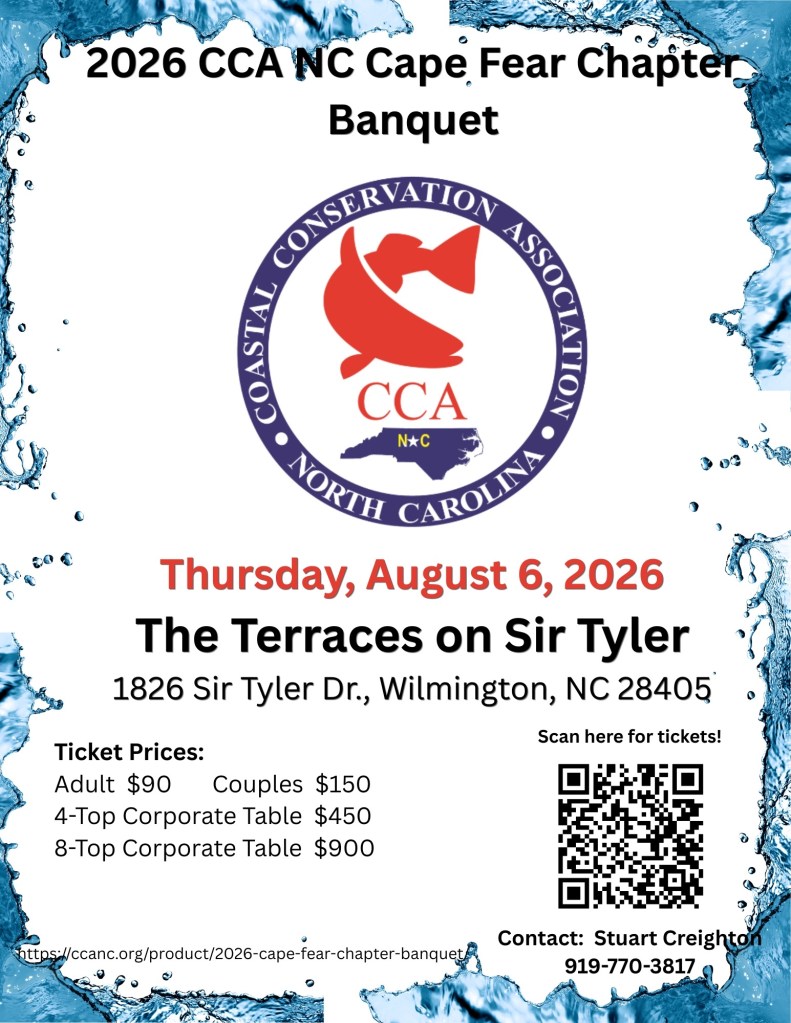
 The Wake County Superior Court has ruled in favor of the Coastal Conservation Association North Carolina (“CCA NC”) and 86 individual citizens in their lawsuit to hold the State accountable for failing to protect North Carolina’s coastal fisheries. The Court’s 190-page ruling, which followed a six-week trial earlier this year, held the State liable based on “overwhelming evidence” that the State breached its legal obligations to North Carolina citizens. Further proceedings addressing remedies needed to cure the State’s management failures and restore North Carolina’s once-abundant coastal fisheries are expected to follow.The lawsuit was filed in 2020 by CCA NC and 86 citizen plaintiffs, including 5 former members of North Carolina’s Marine Fisheries Commission. Through six years of hard-fought litigation, CCA NC was able to prove that by allowing North Carolina’s coastal fisheries to deteriorate and collapse, the State violated the legal rights of North Carolinians to fish and harvest fish—rights guaranteed to them under the public-trust doctrine and the North Carolina Constitution.The six years of litigation included proceedings before the Court of Appeals, which unanimously ruled in favor of CCA NC and the individual plaintiffs in 2022. In that ruling, the Court of Appeals held that the State has “an affirmative duty” under the public-trust doctrine and the North Carolina Constitution to “preserve the people’s right to fish and harvest fish,” which includes a “duty to preserve fisheries for the benefit of the public” and a “duty to keep fisheries safe from injury, harm, or destruction for all time.” In the Wake County Superior Court’s ruling yesterday, the Court applied that decision as binding precedent, finding that the extensive evidence at trial, including comprehensive expert testimony, “overwhelmingly established” that the State has failed to meet those standards. As one of many examples of the State’s extensive failures, the Court cited undisputed evidence that not a single one of North Carolina’s 13 state-managed coastal fish stocks is currently viable.CCA NC Executive Director David Sneed praised the Court’s ruling as “an opportunity,” urging North Carolina’s fisheries managers and elected officials to bring about fisheries management reforms to rebuild our overfished and collapsed coastal fisheries, and then keep them sustainable once restored. “With this ruling, we are calling on the general public, our elected officials, our scientific community, and state fisheries managers to join together with us, roll up our sleeves, and commit to doing the hard work necessary to restore our coastal fisheries resources for the benefit of all citizens and future generations. Coastal fishing in our great State could have such a bright future, and we owe it to our children and grandchildren to make it a reality.”Sneed and Donald Willis, the Chair of CCA NC’s Board of Directors, added their sincere thanks to the many witnesses and fisheries-management experts who testified at trial and played a significant role in supporting the litigation, as well as CCA NC’s General Counsel, Dr. Tim Nifong, and the legal team at Poyner Spruill who took the case to trial.