High Country Smallmouth

Summertime means hot smallmouth action in WNC

The month of August is hot, even in the mountains of western North Carolina. The smallmouth fishing is just as hot on the French Broad, the Toe, and the Catawba rivers, according to Matt Evans of the Catawba Angler in Asheville, NC.

“It’s hot, but so is the fishing for river smallmouth. We chase river smallmouth all summer long,” said Evans.

With summer storms often popping up numerous times a week, the hardest part of river fishing here is finding water that isn’t churned up by rain and runoff.

“The key to having a successful day is finding somewhat clear water,” he said.

Sometimes, Evans said anglers just have to make due with what they have available. And that usually means slowing things down a lot.

“The key to fishing off-colored water is to fish it extremely slow. This will test any angler’s patience, but it’s vital to success,” he said.

It’s never a bad idea to try topwater flies, but anglers should understand it’s hit or miss this time of year.

“The topwater bite for the flyfisherman is excellent on some days, and mediocre on others,” he said.

One thing Evans looks out for is those summer storms, which can lower the air and water temperatures. And that improves the fishing, at least temporarily.

“The best bite will occur when we get a cold front come through, and the water temps get around 75 degrees again. Once this happens, the bite turns on,” he said.

Low water also makes things easier on anglers, at least in terms of locating the smallmouth.

“When the water is lower, it pushes bass into isolated areas looking for higher oxygen content. We will be fishing low water into the fall. And those conditions create some good topwater fishing,” he said.

August might not be Evans’ favorite month for fishing in the mountains, but he said it’s still not a bad way to spend a day outside.

“The best bite of the year is right around the corner. But right now, you can still see some beautiful scenery and do some good fishing in North Carolina’s mountains,” he said.

Brian Cope is the editor of Carolina Sportsman. He has won numerous awards for his writing, photography, and videography. He is a retired Air Force combat communications technician, and has a B.A. in English Literature from the University of South Carolina. You can reach him at brianc@carolinasportsman.com.

Do You Know Your Shrimp?

The North Carolina shrimp fishery harvests three species: white, brown, and pink shrimp. White and brown shrimp are the dominant species, while pink shrimp make up the smallest portion of the annual harvest. From the public’s perspective, all three species are simply sold as “shrimp”. Once cooked, they are indistinguishable by taste and appearance and thus sold without species-specific labels. Instead, labeling focuses on size and whether the shrimp are head-on or head-off.   Although shrimp are primarily harvested for food, all three species are also commercially harvested for use as recreational bait. Shrimp sold for the bait market are smaller and often sold live.   Life History The life history of all three shrimp species is similar. Mature adults leave North Carolina’s estuarine waters to spawn offshore between May and September. A single female can produce one million eggs and may spawn several times. Fertilized eggs hatch into tiny larvae within 12 to 24 hours and rise in the water column. These newly hatched shrimp are carried by shoreward currents to nursery habitats within the various inland sounds. Their growth is fairly fast and depends on factors such as water temperature and salinity. Once they reach about 5.5 inches, they can reproduce.   Shrimp have a short lifespan of 16 to 24 months and can quickly recover from low population levels, making them very resilient. As a result, they can sustain high levels of harvest without the same overfishing concerns that occur in other fisheries. The primary factors affecting annual shrimp abundance are environmental conditions, such as water temperature, rainfall, and tropical cyclones, while fishing mortality has only a minor impact on annual variation.
Breaking Down North Carolina’s Three Shrimp Species
White Shrimp Litopenaeus setiferus, commonly called white shrimp or green tails, are primarily harvested in the estuarine and nearshore ocean waters. They are light gray with green-tinted tails, and their antennae are 2.5 to 3 times their body length. Evidence suggests that warming water temperatures are contributing to an increased abundance of white shrimp in North Carolina and states to the north.   North Carolina has historically had the northernmost commercially viable population of white shrimp. However, in 2022, Virginia began permitting a limited offshore shrimp trawl fishery due to the consistent presence of white shrimp in its nearshore ocean waters. Similarly, North Carolina’s harvest of white shrimp has increased over time, with the species surpassing brown shrimp as the majority species of harvest for the first time in 2005 and regularly doing so ever since. In 2023, 3.8 million pounds of white shrimp were harvested from North Carolina waters, with annual landings surpassing 9 million pounds as recently as 2017.   Brown Shrimp Farfantepenaeus aztecus, commonly called brown shrimp or summer shrimp, are primarily harvested in the estuarine waters of North Carolina. They typically remain low in the water column and depend on certain water temperatures to trigger biological changes. Specifically, decreasing water temperatures prompt overwintering behavior, during which they bury themselves in sediment for protection from the cold. Evidence suggests that warming water temperatures may disrupt this behavior, leading to higher natural mortality and greater variability in landings. Reported brown shrimp landings in North Carolina exceeded 2.7 million pounds in 2023, and were as high as 6.3 million pounds as recently as 2015.   Pink Shrimp Farfantepenaeus duorarum, commonly called pink shrimp or spotted shrimp, are often found in sand or sand-shell bottom habitats. They are easily identified by their pink color and a dark-colored spot between their third and fourth abdominal segments. Similar to brown shrimp, smaller pink shrimp remain in estuarine waters during the winter and bury themselves in the sediment to protect against cold temperatures.   In the past, pink shrimp made up a sizable percentage of the total shrimp harvest in North Carolina. However, landings have been low in recent years, with just over 29,000 pounds landed in 2023. Pink shrimp have accounted for less than 20% of the North Carolina harvest since 1993, and less than 10% in most years.
One of These Shrimp is Not Like the Others
Tiger Shrimp There is another species of shrimp that is occasionally captured in North Carolina, the invasive tiger shrimp (Penaeus Monodon). Native to Southeast Asia, tiger shrimp were first caught off the Carolinas in 1988, following an accidental release from an aquaculture facility. They can grow up to 13 inches and have a rusty brown to black coloration with distinct banding along their backs. North Carolina’s first documented inshore capture of tiger shrimp occurred in 2006 when five specimens were collected from Pamlico Sound. Tiger shrimp are now considered an established species along the southeast and Gulf coasts.

Courtesy of the North Carolina Marine & Estuary Foundation

https://www.ncmefoundation.org/

2025 CCA Cape Fear Chapter Banquet

Call the crew — it’s banquet time in Cape Fear!

Conservation tastes better with good company. Join CCA NC on August 14 at the Terraces on Sir Tyler at 1826 Sir Tyler Drive, Wilmington, NC for cold drinks, full plates, and a room full of people who get it. Call (919) 781-3474 or e-mail maryellen@ccanc.org for reservations.
https://ccanc.org/product/2025-cape-fear-chapter-banquet/

We’re raising support for our coast, our habitat, and strong fisheries in the Tar Heel State.
Auctions, giveaways, and raffles — all to protect what we play in.

🎣

Also, there is a grass roots initiative in South Brunswick to determine of there is an interest in forming a local CCA Chapter. If you are interested in assisting or participating, reply to this blog and you will be contacted.

Who Knew … Tripletail in our Waters, Maybe

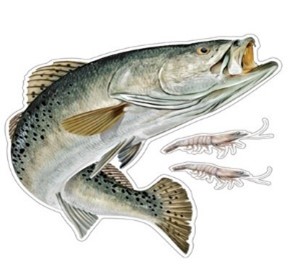
The Carolina Sportsman Magazine says “Summertime is tripletail time”

https://www.carolinasportsman.com/featured/its-tripletail-time/?utm_source=Carolina+Sportsman&utm_campaign=99c70297e9-RSS_EMAIL_CAMPAIGN&utm_medium=email&utm_term=0_c41990a090-99c70297e9-290292534

While most anglers think of tripletails as a delicacy caught up and down Florida’s coast, North Carolina and South Carolina anglers can target them all summer and expect to take home a few fish every trip. And when the heat peaks, the tripletail action gets really hot.

Jordan Pate of Carolina Guide Service out of Pawley’s Island, said tripletail can make an inshore trip, even if redfish, flounder, specks and tarpon aren’t biting.

REMINDER … Coastal Conservation Association of North Carolina … 2025 Cape Fear Chapter Banquet

Greetings Club Members … in case you are interested in this event and learning more about our REMINDER … Coastal Conservation Association of North Carolina … 2025 Cape Fear Chapter Banquet.

Sea Trail Fishing Club does not endorse the political activities of CCANA or any other organization posting opinions regarding North Carolina fishing regulations and laws.

Thursday’s Speaker is Captain Tim Disano

Thursday at 6:30 is Member’s Night for the Sea Trail Fishing Club at the Pink Palace!

Located at 295 Rice Mill Circle, Sea Trail Plantation, Sunset Beach

Members, Guests and Visitors are encouraged to attend Tim’s talk:

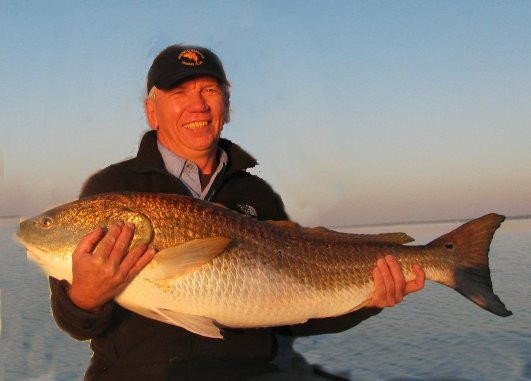
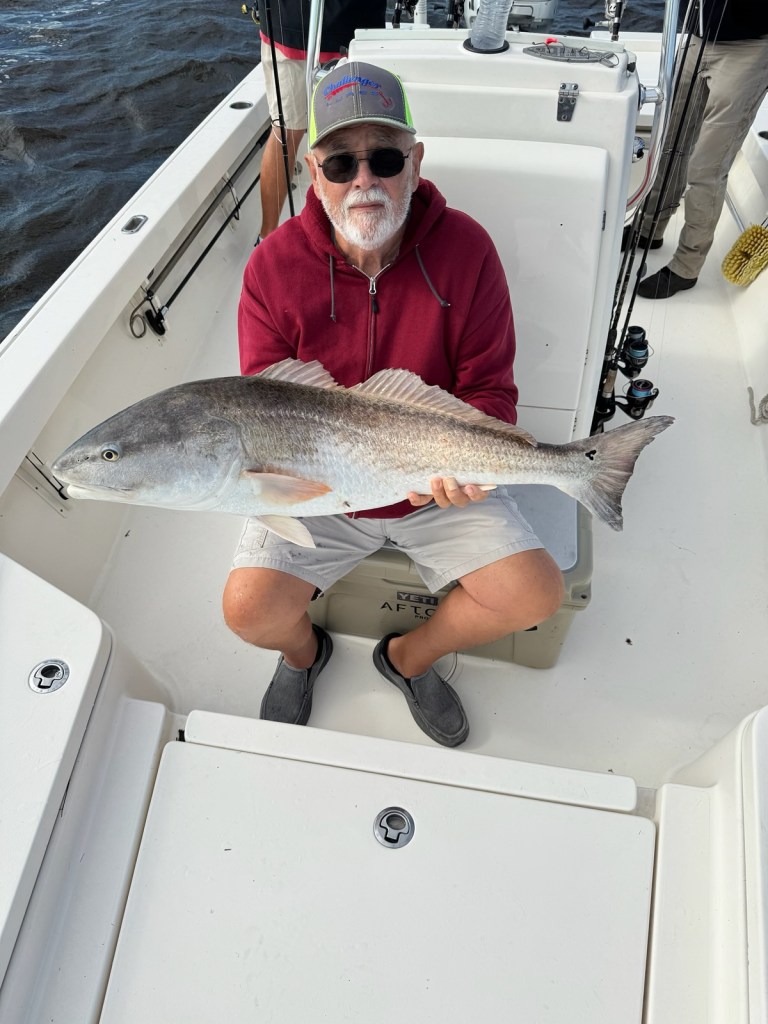
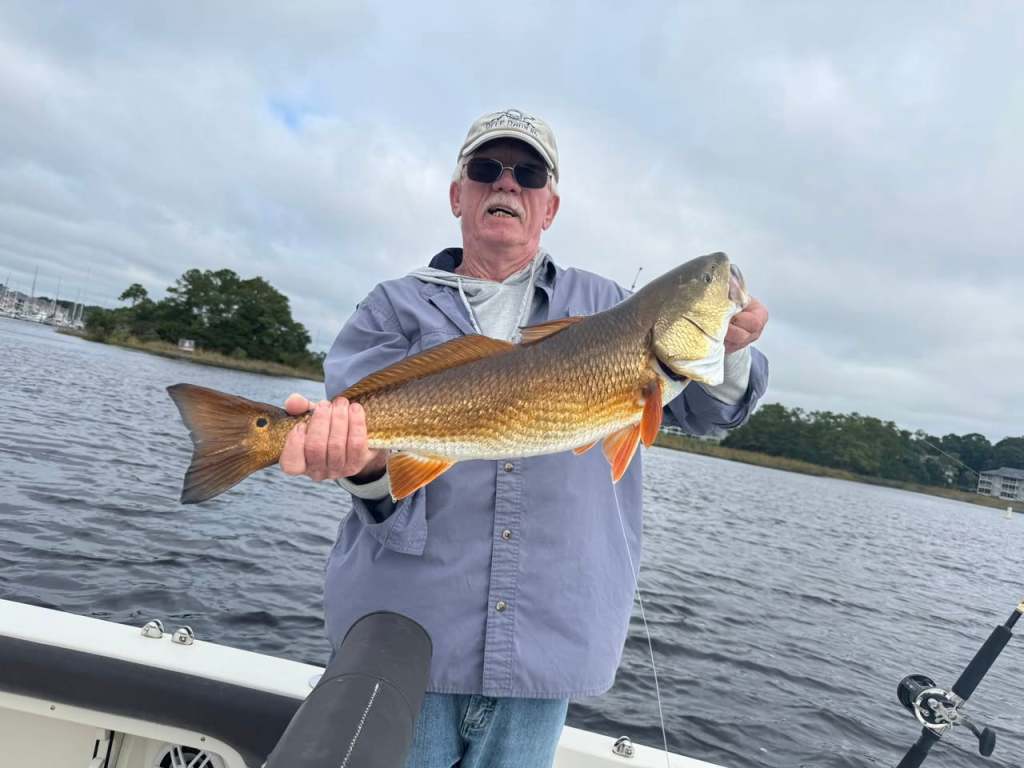
“All Things Redfish”

If you fish for redfish, red drum, puppy drum or bull reds on the pier, the shore, or from a watercraft of some kind, Captain Tim’s talk should be interesting to you.

Captain Disano has talked to the Club before about other subjects and always has presented an interesting discussion. He has been a local fishing guide in the Sunset Beach-Ocean Isle area for several years and knows these waters well.