Author Archives: Mike Shannon

Warming Trends for Trout

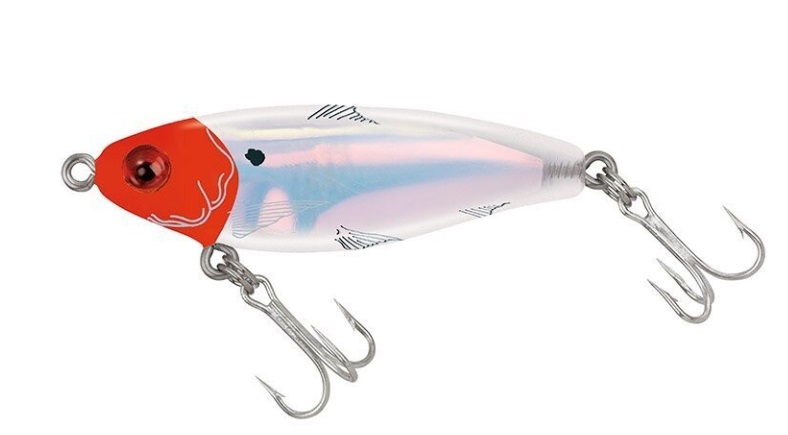
.The weather is great now and Spring has arrived! Speckled trout are starting to show up in numbers and although the number of catches may not be as great as in the Fall, there is still plenty of action. The amount of bait that trout feed on is also increasing. Count these as small mullet, mud and glass minnows and, of course, shrimp. Water temperatures are rising too and specks like ranges from 55 to 65 F. Tides also play a part in the temperature ranges. So as the tide falls and the warmer water filters out of the shallow marsh areas. In a Carolina Sportsman article (April 2021), Captain Tripp Hooks recommended fishing along the ledges of the ICW and the Calabash, Shallotte and Lockwood Folly Rivers. He targets 3 to 7 feet of water along grass lines and shell banks. Although he prefers live bait good artificial baits like slow-moving, suspending lures may also be effective. Options include Rapala X-Raps, MirrOlure 17 MRs, and the like.

The Tides that Time

From time to time we have heard that the best fishing is on the falling or outgoing tide while others have said that the incoming tide is best for one reason or another. But almost all agree that the rising or falling tide is always better than the slack or dead tide. Obviously moving water is best whether it is during the tidal movements or due to water moving out of rivers or creeks. However, there are times that the angler’s choices are limited due when the sun rises or sets, or when the wind and rain are due, or even to one’s personal schedule.

One of the most important things, reports Brian Cope in April’s issue of Carolina Sportsman, is knowing where enough water is present on either tide, and knowing how long you can fish without getting your boat stranded. But Brian also cautions against leaving your honey hole too early on the falling tide. Bait and game fish are both moving out of the shallows and in the frenzy and the predator specie will not pass up an easy meal. It may not be obvious to everyone but creeks and marsh outlets closer to open water will drain last as the tide goes out. The tide lag may be 15, 30 or even 45 minutes, so make a game plan designed to hit your hot spots at the right time and then stick to it.

On the incoming tide, the opposite is true. The closer one is to open water, the sooner hungry fish will arrive to feed on baitfish, fiddler crabs and shrimp. As the fish move into the shallows with the incoming tide it may be difficult to stay in the “zone”, so it is sometimes more successful to move with the tide. Whether the tide is incoming or outgoing, it is best to keep your eye on your depth finder!

P.S. Don’t miss this week’s Sea Trail Fishing Club meeting at the Pink Palace in the Sea Trial Community! Guest Speaker, Donald Coldwell, will give a presentation on boating safety.

You can check out this week’s Agenda on this website.

.

Big Spring Trout

Did you all notice Alan’s post on Facebook about the 28” trout reported by Captain Tripp? As water temperatures rise, speckled trout are aggressively hunting down meals as bait begins to hatch in spring. Wyatt Parcel of SaltStrong believes that this is one of the best times of the year to hit the water in search of your Personal Best fish.

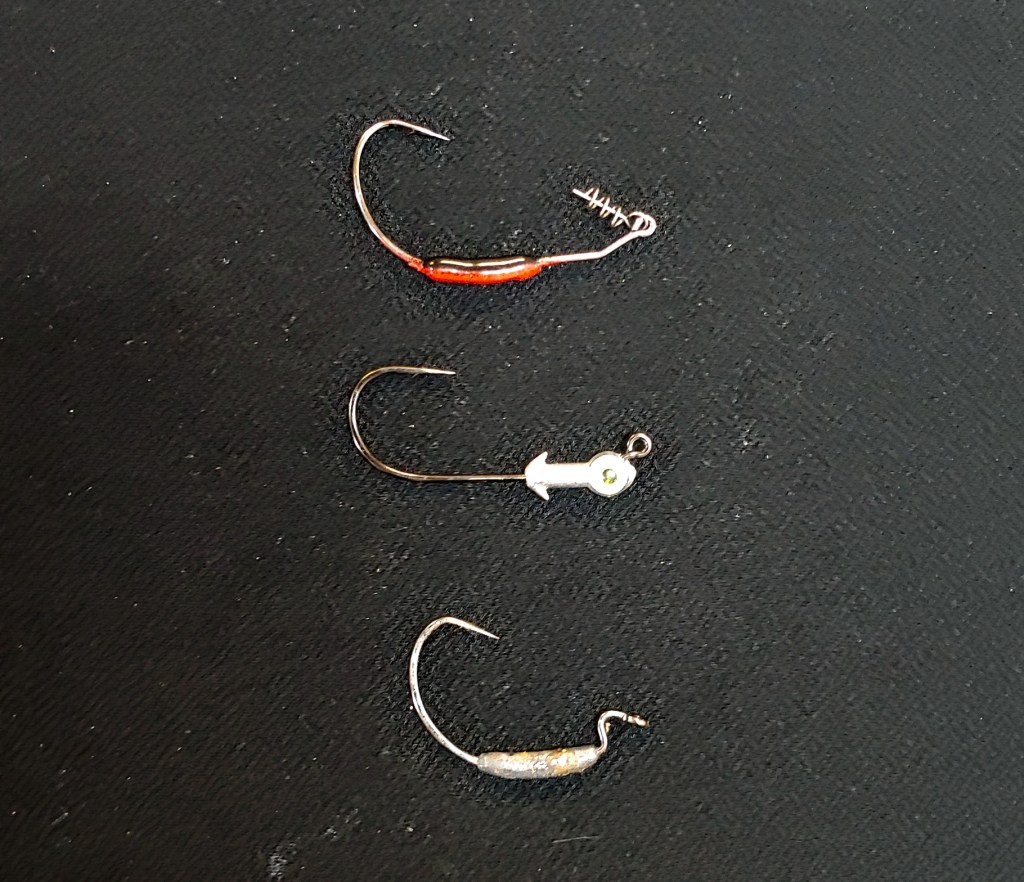
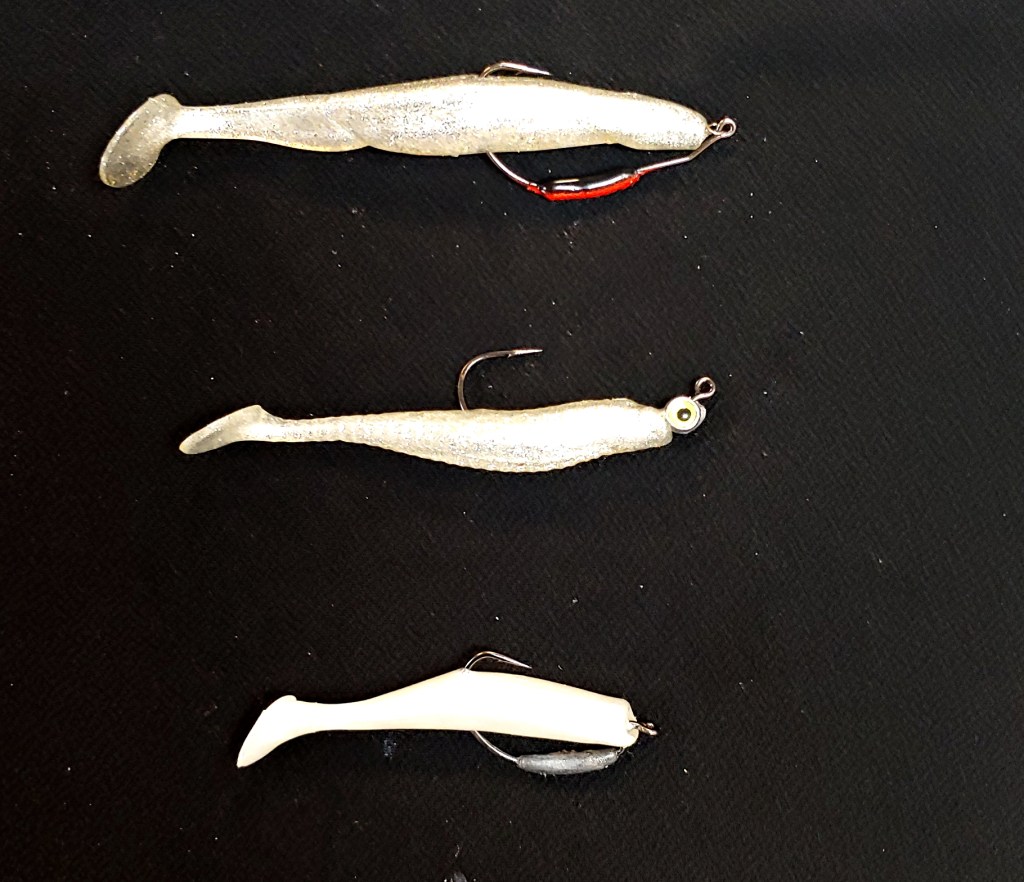
Usually, smaller paddletails and lures are the way to go in the spring, however, “Big” is the way to target larger trout on the lookout for high-calorie, easy meals. If you see mullet leaping out of the water and running away from predators, this is an indicator to rig up a larger 5- or 6-inch paddletail and target hungry trout. During this time of year, 1/4 oz. to 3/16 oz. jigheads or weighted hooks are best because the fish are moving toward deeper pockets of water this time of year. Check out the deeper holes just off the flats or on ledges leading into a flat. Trout are ambush predators with an angled jaw designed for coming up from below and striking bait. The larger speckled trout are likely to strike your lure as it drops to the bottom rather than when you jig it to the surface.

Spring is also one of the best times of year to break out the topwater plugs because trout are more than willing to get up and after bait swimming near the surface, especially in the mornings or evenings as they slide up into the shallows to look for larger baitfish. Top water lures that have a rattle better mimic the sound of baitfish. Trout are very sight-focused hunters and will be attracted to something moving quickly that is also creating a disturbance along the surface of the water. Often, trout will continue following a lure until it decides to fully commit and strike the lure. Even if a fish pops the surface behind your topwater it is a good idea to continue working the lure because the trout may not give up easily!

What Knot

Future Fishing Forecast for this week:  During the last few days we have been blasted by high winds which have made fishing difficult to impossible. Going into the week the winds are expected to die down considerably and rain is not expected to be much of a problem – so fishing should improve.  Recommendations are to fish areas at creek mouths and marsh inlets. Areas with structure (I.e. oysterbeds and docks) and protected from the winds should be the most productive. Winds in the early part of this week are expected to blow out of the S and SE, changing to the NE in the latter part of the week. As noted last week, the artificial bait of choice would be 4-inch paddle tails. But the 4-inch Z-Man Minnow has also been reported as a good choice.

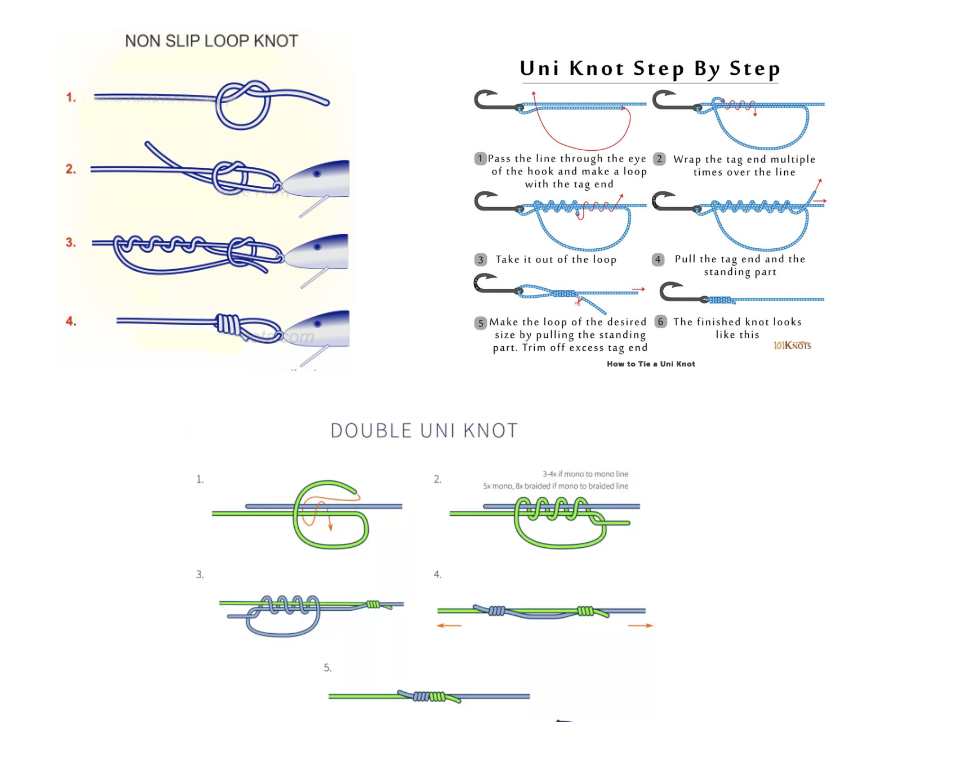
One of our recent Club speakers mentioned favorite knots. I generally get by with the Uni Knot, the Double Uni knot and the Loop knot. With top water lures, a simple Uni knot suffices, but I use a Loop knot on soft plastics to allow for more action. When tying braid to leader the Double Uni knot provides good strength and a trim appearance. I use a 7/11 ratio of wraps (mono to braid) for luck.  The FG knot is said to be stronger and more streamlined than the Double Uni but it is a little harder to tie for me. Still there is a good video that is intended to make it simpler.  (See: https://www.youtube.com/watch?v=ZPTzkep9xlI)

 Below are some of the best visual guides that I have found for learning these knots.

Spring Changes

I have been fishing for over half of a century, but when I first came to the inshore fishing area at Sunset Beach, I was essentially clueless. The Sea Trail Fishing Club has been very beneficial to improving my knowledge of inshore techniques. I also found a unique website at SaltStrong.com that featured inshore fishing tips. Although there is a wealth of information on the ‘free’ site, I decided to join the ‘Insider’s Club’ which features weekly ‘Game Plans’ that are tailored to different areas along the eastern coast from Maine to Mexico. So this week I decided to feature a few tips that are relevant to this area.

Since the locale weather conditions are fluctuating rapidly from warming to cooling, Spring fishing is usually a challenge not only for anglers but also the fish that are trying to find both warmth and food. During the colder months, trout and redfish move up into creeks and backwaters. But as the weather warms a migration occurs to open waters. The continued warming and cooling trends are sometimes confusing and keep fish on the move. During these periods, fishing transition zones may be the key. In order to find and catch fish during these crazy frontal weather changes it is important to be versatile. 

In the Spring, fish are moving relative to both weather fronts and the time of day. Wind direction is another factor to consider when trying to locate these fish. The fishing hot spots of today may not be the same tomorrow.

Last week I mentioned that the white paddletail or some facsimile thereof is one of the most versatile lures. The 4-inch variety is similar to the size of baitfish found this time of year and can be rigged with different weight jig heads to fish the top, middle and lower parts of the water column. Fish deeper in cooler weather and more shallow as the water warms. For shallow presentations this lure can also be made to be relatively weedless by keeping the barb of the hook close to or slightly imbedded.

Mistakes that Anglers Make – Part 2

THE LURE OF FISHING CHOSE THE RIGHT LURE FOR THE SITUATION

There’s a lot that goes into choosing the right or wrong lure for the situation you’re fishing but it mostly falls into three categories: Profile, Size and Color.

The Right Profile: There are two major profile categories: Baitfish and Crustaceans. What are you seeing, and which one should you use? Well, it primarily depends on what you’re seeing the fish eating when out on the water. If you see trout blowing up on baitfish along the surface, then go with a baitfish profile. If you see redfish tailing and digging in the mud for crabs and shrimp, use a crab or shrimp profile.

Another rule of thumb: If you can’t see anything is this: crustacean baits are better in colder months because baitfish are less prevalent this time of year, and baitfish profiles are better in warmer months.

The Right Size: When choosing what size lure to use, you want to match the hatch.

If you’re seeing 3″ glass minnows get eaten, use a 3″ lure. If you’re seeing 6″ mullet get eaten, use a 6″ lure. If your not seeing either: Either guess or go back to the Profile question.

Another good rule of thumb to remember is that baitfish are smaller in spring and larger in fall, so a good plan is to use smaller lures in the spring and larger lures in late summer and fall.

The Right Color: If you’re fishing in clear water, use natural or light colors.

If you’re fishing in dark water, use either darker colors or those that reflect lots of light. The bottom line is that, within the light and dark categories, all colors do not work all of the time. Sometimes you just have to experiment so don’t get hooked on one color if it isn’t working for you.