Although we are prohibited from catching flounder most of the year and trout early in the year due to cold-stun regulations, it doesn’t mean that we won’t hook up with them while we are out fishing for other species. Often, we are also faced with releasing fish that are too short or even too long. And if we are extremely lucky, we may catch a fish that exceeds our bag limit – wouldn’t that be nice!
Unfortunately, many uninformed anglers manhandle a catch before carelessly tossing it back into the water. That’s wasteful! To truly give the fish a fighting chance, take the time to learn and use the proper catch-photo-release method, or as it is commonly called, the CPR method
After years of research, conservationists have developed the best method to release a fish. Follow these rules for a safe and effective release.
WORK FAST
Returning the fish to the water as quickly as possible is key to increasing survival. The fish’s slime coat protects it from parasites. If you have to handle a fish, wet your hands first. A rubber-coated landing net protects the fish’s slime and prevents tangled lures and lines.
WET YOUR HANDS AND KEEP FISH HORIZONTAL
Ideally, keep the fish in the water. If lifting the fish, do not hang it vertically by the jaw. Fish swim horizontally; hanging vertically strains the fish’s organs. Support the weight.
TAKE THE PHOTO OP QUICKLY
It is best to take a photo of the fish without removing from the water, but if you do need to support your bragging rights or need to verify the catch for the fishing tournament, have your camera, bump board or other measurement device handy.
HOOKS
Use circle hooks or barbless hooks. Circle hooks are designed to stick in the jaw greater than 90 percent of the time. Not only does this reduce foul or deep hooking, but circle hooks are easier to remove. No need to rear back and set the hook. Simply apply drag pressure and the hook finds its place.
USE DEHOOKING TOOLS
Use the right tool. Most anglers use pliers to remove a hook, but a special tool, called a dehooker, removes the hook without touching the fish.
EVEN RELEASE INJURED FISH
Return an injured fish to the water, even if it likely won’t survive. A bleeding or deep-hooked fish still has a better chance of recovering in the water than on the frying pan. Even if it doesn’t survive, the fish could benefit other wildlife. An added bonus is that you won’t get cited for having an illegal fish.
REVIVE TIRED FISH
A common mistake is rocking the fish back and forth to force water over the gills. Fish don’t swim backwards. Instead, move the fish in a figure-8 pattern or walk it along the bank.
CUT OFF DEEP SET HOOKS
If the hook is too deep to retrieve, cut the line as short as possible. Especially important for toothy fish. Yanking the hook or aggressively removing it can cause injury. Most hooks rust quickly. Barbless hooks can often be disgorged.
In order to maintain our fisheries in as good a condition as possible, released fish need to be returned to the water in as safe and healthy condition as possible.
The Sea Trail Fishing Club Board of Directors welcomes its new members:
Sergeant at Arms – Sanford “Sandy” Herman
My background includes past owner of a Financial Services Company and Real Estate Broker of New York and No. Carolina; with many years of a community service National Scholarship Program. I’m an Army veteran, proud husband to Beverly, father and grandfather. Upon becoming semi-retired we moved here to Sea Trail, Sunset Beach in February 2022. I learned fishing as a Boy Scout and has been one of my joys in life since. My favorite is big game fishing and most enjoy offshore trips. Upon learning of the Sea Trail Fishing Club I joined that month, as I wanted to learn about the 5 major fish that thrive here in the Intercoastal Waterway. I look forward to working with the STFC Board and help make the club flourish over the next few years. I’m excited to learn and fish this area, while making new friends and fellow anglers.
Member at Large – Mike Sutton
I was born in the foothills of western NC and grew up fishing the Yadkin River, Wilson’s Creek, John’s River and countless smaller creeks from Caldwell County to Asheville NC.
I spent decades as a firefighter at Patterson Fire Department, rising to the level of Assistant Fire Chief. I joined the Lenoir Police Department where I served as a patrol officer. I retired after being shot in the line of duty.
My wife and I owned and operated a horse farm for many years before selling it and moving to the beach. We love surf fishing and taking our 18′ bay boat out on the ICW.
I look forward to serving on the Sea Trail Fishing Club board.
If you recognize one of these guys, please offer your thanks for their efforts to make Sea Trail Fishing Club a success!
A trout fisherman discovers it’s not always conventional medicine that brings respite. Courtesy Garden & Gun, December 2025/January 2026 edition, by Jeff Zillgitt
Two fried chicken thighs and two legs. When I shuffled into the Wolftown Mercantile Country Store, on a two-lane road near two of my favorite brook trout streams in Virginia’s Shenandoah National Park, that’s the order I placed as a matter of routine.
But on this day in late March 2023, I had no business going fly fishing, much less eating a meal for two. Three weeks earlier, I’d lost 80 percent of my stomach during surgery for gastric cancer. Alison, my wife, was desperate to get me out of a funk (even a bit of depression) and asked my friend Grover to go fishing with me. “When am I going to get my old Jeff back?” Alison asked. She knew getting me to a mountain stream was a step in that direction.
My new tiny stomach allowed just a few nibbles, but returning to one of my fly-fishing rituals felt gratifying—a dose of normalcy amid uncertainty, not to mention a much-needed break from the bland hospital food and unsatisfying high-calorie shakes that nourished me postsurgery. In a quick photo Grover took of me, I’m holding a nice brook trout, with a hint of a smile coated in a sheen of grease emerging. The stream, the trout, the fried chicken: They all helped me find a day better than the one before.
If you fish, hunt, hike, kayak, or boat, you undoubtedly have rituals—routines that become embedded in your pursuits. Rituals are not always the same as superstitions. Superstitions are attached to luck or fortune, and I don’t ascribe my fishing success or lack thereof to my rituals. I practice them because they bring comfort, appreciation, and balance.
Take the streamside lunch. Or even better, the in-stream lunch, sitting on a boulder with water flowing around me. I need that meal to feel right about a day on the water. Beyond sustenance, I need the joy of sharing that meal with a friend, when discussions drift from fishing to other important matters: family, marriage, living, dying. I have never walked into the woods and waded a stream to escape anything. I go to find and rediscover and leave the mountains a better person than when I entered—or at least with a reset equilibrium and deeper connection to the natural world.
Lunch doesn’t always come from the same place. Depends on where I’m fishing. Sometimes it’s a chicken salad sandwich from Red Truck Bakery in Warrenton, Virginia, on my way to a stream near Sperryville. Sometimes it’s a Capri sub (prosciutto, Genoa salami, provolone, and spiced capicola) from the Italian Store in Arlington, or it might be a pulled pork sandwich from Bean’s Barbecue in Edinburg, while headed to a seldom-fished brook trout stream tucked inside the George Washington and Jefferson National Forests.
As time has passed since that first post-surgery outing, I now eat more than a few bites. The surgeon told me the 20 percent of my stomach that endures would “stretch out,” and I’d be left with a functioning organ the size of a small fist. It’s still a task to eat a large meal, but my enjoyment of the streamside lunch has not waned. And I find that when I’m removed from the stress of daily life and eased by the peace of the stream, sometimes, even if just for a minute, my situation doesn’t feel as daunting.
The barbecue place sits next door to Murray’s Fly Shop, the store Harry Murray founded in 1962. He is the unofficial dean of brook trout fishing in Virginia. His book, Trout Fishing in the Shenandoah National Park, is required reading, and learning from Murray will put you into fish whether on a mountain creek along the spine of the Blue Ridge or big Western rivers. My copy is tattered from years of use, and it’s one of a handful of fishing books I revisit during the winter, when my fishing is reduced to daydreams—another of my rituals. I flip through for tips I had forgotten and for stream information. Should I try Big Run or East Hawksbill Creek in the spring?
As with others enamored with both fly fishing and literature,A River Runs Through It, Norman Maclean’s classic, remains a steadfast friend. No matter how many passages I have marked, I find new ones to highlight each year. Christopher Camuto’s A Fly Fisherman’s Blue Ridge is a naturalist’s solemn rumination on each season. I can open to most any chapter and I know where he is. Harry Middleton’sThe Earth Is Enough is another book I return to each winter. An extraordinarily thoughtful author on all things fly fishing in the Southern Appalachians, Middleton, who died in 1993 and spent his last days working on a garbage truck, deserves wider appreciation.
Those books and authors have been with me for decades—companions unaware of their impact. In late 2016 and early 2017, I underwent treatment for metastatic colon cancer, and chemotherapy caused a debilitating and life-threatening heart condition called coronary vasospasms that kept me awake through the night. As I struggled through discomfort in the quiet of 3:00 a.m., books about rivers, trout, and fly fishing provided intermittent respites from the pain, allowing my mind to get lost in the waters of Maclean’s Big Blackfoot River and Middleton’s Starlight Creek. Middleton’s honest, brutal, and poetic prose is a soulful ode to small mountain trout streams and the earned wisdom that spills from the hills. It’s a salve for the mind, spirit, and heart.
“The angler hopes for nothing and prays for everything,” Middleton wrote. “He expects nothing and accepts all that comes his way. And although he knows all along that he will never sink his hook into a trout stream’s true mystery, the desire to try, to cast once more and once more again, is never quenched, for there is always that chance that one more cast will carry him beyond skill and luck and bring him untarnished magic.”
See, it is not always conventional medicine that provides healing. Another spring arrived and another one after that, and then a few more, and I am grateful. I read those books before cancer and will continue rereading them, waiting for another spring.
Even the drive to the stream is an important ritual—a snippet of time reserved for undisturbed thought. With each mile, stress diminishes and excitement mounts. I cue up a playlist of familiar tunes—the SteelDrivers’ “Sticks That Made Thunder,” Tim O’Brien’s “Restless Spirit Wandering,” Steep Canyon Rangers’ “The Mountain’s Gonna Sing,” and lately, Billy Strings’s “I’m One of Those,” among them—and it’s as if I can hear the fiddle coming down the mountain. When I get closer to the water, I turn down the volume, roll down the windows, and listen for the stream. The river’s song is vital too. Too loud, and the water might be too high to fish. Too quiet, and it might be too low. But there is a volume that indicates the perfect flow. Listen to what the river says.
While I’ve long appreciated time on the water, I’d be naive to minimize the impact of two gastrointestinal cancers on my gratitude. Time is limited, and for me, that calculus is more acute. The days turn from endless to numbered, with the idea that another winter and another rereading of a classic will lead to one more streamside lunch. That hope has helped sustain me this far.
At the end of my final day of the season last year, in mid-November, I hiked back to my car and snipped off the fly, an orange Stimulator pattern, a go-to for brook trout in these waters. As I tossed it into the center console, I recalled that I’ve kept a fly, not the same one, in that spot for about the past decade. A leader and a spool of tippet sit alongside. They stay there through the winter—not as talismans but as reminders, of days spent on the river, and of days still ahead.
October’s Sea Trail Fishing Club’s Guest Speaker will be Jesse Bissette.
Jesse Bissette is the Marine Fisheries Commission liaison for the N.C. Department of Natural Resources Division of Marine Fisheries.
He will address the “Manditory Harvest Reporting Program”
Patricia Smith, Public Information Officer of the N.C. DNR will also be available for questions.
Jesse began his career with DMF in the Marine Recreational Information Program — in DMF shop talk, that’s MRIP. As an MRIP creel agent, he spent his time interviewing anglers for recreational fishing surveys up and down the North Carolina coast. He also worked with the division’s Observer Program before moving to Public Affairs where he was the division’s multi- media specialist.
In his current position, Jesse supervises the Marine Fisheries Commission Office, working closely with the commission chairman, the Division Director, and Division staff to plan commission and advisory committee meetings. He is also part of a Mandatory Harvest Reporting Outreach Team at the Division. He has been visiting fishing clubs across the state to talk about these upcoming requirements.
In his spare time, Jesse works with team of folks that run the website NCFishes.com, an independent project dedicated to photographing all of the various fishes found in North Carolina waters. Many of the beautiful photographs of fish found on the Division of Marine Fisheries website were taken by Jesse.
Background Information: North Carolina is implementing mandatory catch reporting for certain species starting December 1, 2025. Both recreational and commercial fishermen must report their harvests. Recreational anglers are required to report specific species: Red Drum, Flounder, Spotted Seatrout, Striped Bass, and Weakfish. Commercial fishermen must report all fish harvested in coastal and joint fishing waters, regardless of whether the fish are sold. The NC Division of Marine Fisheries (DMF) will provide reporting methods, which are expected toinclude web-based tools and eventually a smartphone app, for the public to comply with this law.
North Carolina Marine Fisheries Regulations Threaten Financial Liveliehood of N. C. and S. C. Charter Captains and Fishing Guides. Contact Laurie Thomas Vass ltvtoo@gmail.om Sunset Beach, N. C.
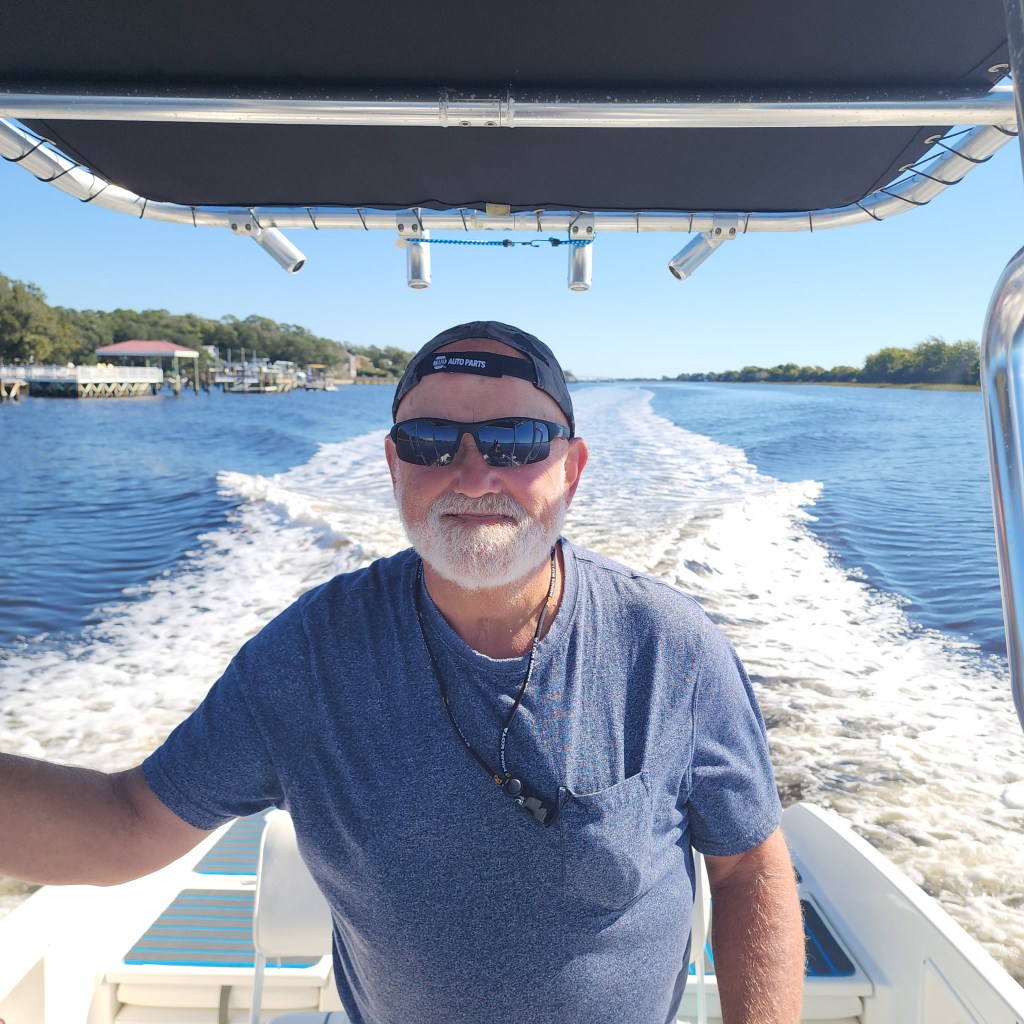
Two charter fishing captains, one from Shallotte, North Carolina, and one from Little River, S. C., expressed their disgust with the over-regulation of recreational fishing in North Carolina. “The over-regulation of fishing in North Carolina is damaging our fishing populations in South Carolina,” said Scotty Lambert, a charter captain and owner of Little River Fishing Fleet. Insert pic 1 Scotty Lambert, Little River Fishing Fleet.
“Anglers from all over North Carolina are overcrowding us in South Carolina because they are prohibited from catching trout, flounder, and have restrictive daily limits of 3 fish per day, on Blue Fish, in North Carolina” he added. Josh Reynolds, of Maverick Charters, in Shallotte, N. C., said he doubts the accuracy and legitimacy of the North Carolina data used to prohibit fishing in North Carolina.
“I fish just about 365 days a year,” he said. “I see an abundance of sea trout, flounder and Blue Fish every day. The over-regulation is killing me financially,” he added. “I have had to target Sheepshead in order to stay alive financially, and the over-regulation in the other species is causing a decline of the Sheepshead population because that is the only fish anglers can keep,” he added. Both charter captains were exhibiting their businesses at Daves Outpost, in Sunset Beach, N. C. , in the fifth annual South Brunswick celebration of recreational fishing.” Greg Bloom and Fletcher Frink, the executives of Daves Outpost, expressed their concern about the negative economic effects the over-regulation of fishing in North Carolina is having on the charter fishing business.
“We hold our event to promote the local recreational fishing industry in Southern Brunswick County,” said Frink. “We are trying to do whatever we can to help the charter captains survive, by hosting this event,” he added. Over 50 small businesses exhibited at the event, held on April 6, 2025. One of the small businesses at the event was Griffin Canady, the owner of Watermans Choice, an oyster farming operation, located AT Topsail Beach, N. C.“I worked for 6 years with state environmental agencies before I started my oyster farm,” Canady said. “I know first hand the beneficial effects our oyster farm has on the local marine environment, and can see the habitat improving to vibrant areas from the dead zones before we started farming area,” he said.
The event drew about 1000 visitors.
“I love North Carolina, and love the people who fish with me,” said Reynolds. “I cannot understand why the State Government is intent on harming my business with over-regulation” he added.
About Little River Fishing Fleet. We have 4 boats and full crews to do both inshore and offshore fishing. We accommodate whatever type of fishing our anglers desire. https://cptscottysfishingcharters.com
About Maverick Charters. We fish intercoastal creeks and target trophy Sheepshead. 910 477 3222.
About Daves Outpost. We are a full service one-stop shop for all your fishing needs. We have our own shrimp boat and feature live shrimp and minnows on a daily basis. https://davesoutpost.com/store-info. 910 579 2016.



 July 12, 2024 New recreational, commercial harvest reporting requirements delayed to Dec. 1, 2025 MOREHEAD CITY – New harvest reporting requirements for recreational and commercial fisheries have been delayed by one year and will now become effective on Dec. 1, 2025. The N.C. General Assembly recently passed
  WRC Contact:
  Sea Trail Fishing Club
You must be logged in to post a comment.