Category Archives: Uncategorized

REMINDER: Striped Bass season opens April 1 in portions of Tar-Pamlico and Neuse rivers

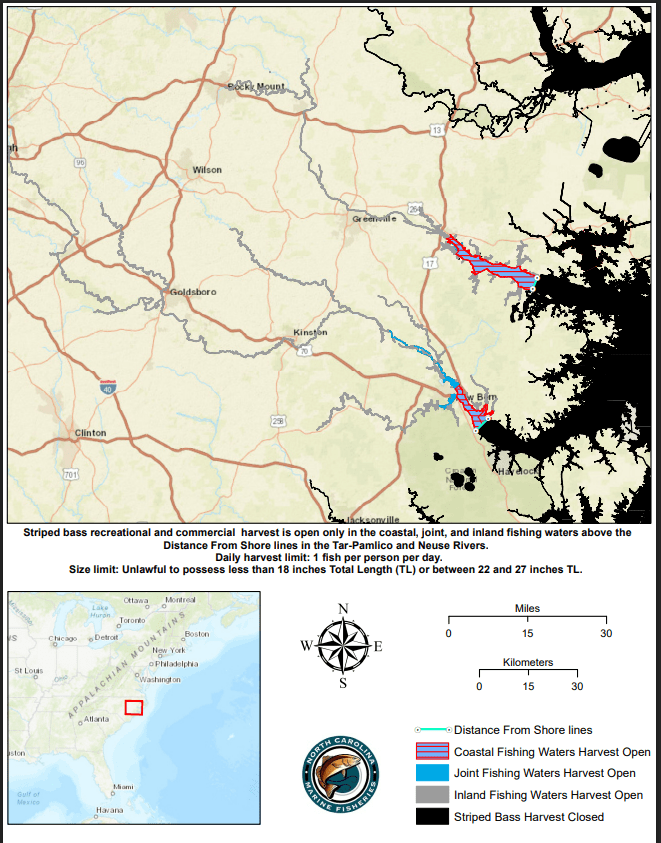
MOREHEAD CITY – The N.C. Department of Environmental Quality’s Division of Marine Fisheries reminds fishermen that a one-month striped bass season will open April 1 in portions of the Tar-Pamlico and Neuse rivers and their tributaries.

The season will open April 1 and close April 30 for both recreational and commercial fisheries. The following provisions will apply:

Recreational

  • Creel limit: One fish per person per day
  • Size limit: 18-inch minimum total length and no striped bass between 22- and 27-inches total length

Commercial

  • Trip limit: One fish per person per day
  • Size limit: 18-inch minimum total length and no striped bass between 22- and 27-inches total length
  • Hook-and-line allowed as legal commercial gear in the striped bass fishery
  • Commercial tagging requirements will continue
  • Tie-down and distance from shore requirements for gill nets will be maintained

Area Description

The recreational and commercial striped bass season in the Tar-Pamlico and Neuse rivers will open upriver of the demarcation lines below.

  • Tar-Pamlico River: Upriver of a line beginning at a point at Gum Point 35° 25.1669’ N – 76° 45.5251’ W; running southwesterly to a point at Fork Point at 35° 23.4453’ N – 76° 46.4346’ W.
  • Neuse River: Upriver of a line beginning at a point at Cooper Point 35° 02.1433’ N – 76° 55.9965’ W; running southwesterly to a point at Fisher Landing Point 35° 00.1550’ N – 76° 58.5738’ W.
The Catch and Release Option

Although we are prohibited from catching flounder most of the year and trout early in the year due to cold-stun regulations, it doesn’t mean that we won’t hook up with them while we are out fishing for other species. Often, we are also faced with releasing fish that are too short or even too long. And if we are extremely lucky, we may catch a fish that exceeds our bag limit – wouldn’t that be nice!

Unfortunately, many uninformed anglers manhandle a catch before carelessly tossing it back into the water. That’s wasteful! To truly give the fish a fighting chance, take the time to learn and use the proper catch-photo-release method, or as it is commonly called, the CPR method

After years of research, conservationists have developed the best method to release a fish. Follow these rules for a safe and effective release.

  1. WORK FAST

Returning the fish to the water as quickly as possible is key to increasing survival. The fish’s slime coat protects it from parasites. If you have to handle a fish, wet your hands first. A rubber-coated landing net protects the fish’s slime and prevents tangled lures and lines.

  • WET YOUR HANDS AND KEEP FISH HORIZONTAL

Ideally, keep the fish in the water. If lifting the fish, do not hang it vertically by the jaw. Fish swim horizontally; hanging vertically strains the fish’s organs. Support the weight.

  • TAKE THE PHOTO OP QUICKLY

It is best to take a photo of the fish without removing from the water, but if you do need to support your bragging rights or need to verify the catch for the fishing tournament, have your camera, bump board or other measurement device handy.

  • HOOKS

Use circle hooks or barbless hooks.  Circle hooks are designed to stick in the jaw greater than 90 percent of the time. Not only does this reduce foul or deep hooking, but circle hooks are easier to remove. No need to rear back and set the hook. Simply apply drag pressure and the hook finds its place.

  • USE DEHOOKING TOOLS

Use the right tool. Most anglers use pliers to remove a hook, but a special tool, called a dehooker, removes the hook without touching the fish.

  • EVEN RELEASE INJURED FISH

Return an injured fish to the water, even if it likely won’t survive. A bleeding or deep-hooked fish still has a better chance of recovering in the water than on the frying pan. Even if it doesn’t survive, the fish could benefit other wildlife. An added bonus is that you won’t get cited for having an illegal fish.

  • REVIVE TIRED FISH

A common mistake is rocking the fish back and forth to force water over the gills. Fish don’t swim backwards. Instead, move the fish in a figure-8 pattern or walk it along the bank.

  • CUT OFF DEEP SET HOOKS

If the hook is too deep to retrieve, cut the line as short as possible. Especially important for toothy fish. Yanking the hook or aggressively removing it can cause injury. Most hooks rust quickly. Barbless hooks can often be disgorged.

In order to maintain our fisheries in as good a condition as possible, released fish need to be returned to the water in as safe and healthy condition as possible.

R.I.P. Larry Hershoff

After a long illness, the Sea Trail Fishing Club has lost one of their most cherished and respected members. Larry Hershoff was one of the first members in our organization and a member of our Finance Team. Larry has fished with more than a few of you and was also active in the local government in Sunset Beach, the Sea Trail Men’s Golf Association and several other ad hoc groups such as Thursday Evening Bridge. A loved and respected member, Larry will be missed.

For more information about Larry and future services:

Waters to close to commercial and recreational Spotted Seatrout harvest

MOREHEAD CITY – The N.C. Department of Environmental Quality’s Division of Marine Fisheries will close all Coastal and Joint fishing waters in North Carolina to both commercial and recreational Spotted Seatrout harvest at 4 p.m. Friday, Feb. 6, 2026, due to widespread cold stun events.

Cold stuns are natural events that occur when there is a sudden drop in water temperature or prolonged periods of cold weather that makes the fish sluggish. Many fish will die from the cold. Others fall prey to birds and other predators. Studies suggest that cold stun events can have a significant impact on Spotted Seatrout populations.

The Division has confirmed significant Spotted Seatrout cold stun events in 10 waterbodies, from Hyde County to Pender County. The Division is still receiving and verifying more cold stun reports and collecting associated environmental data. These efforts will continue regardless of the closure so the Division can measure the magnitude of the cold stun event to evaluate how to protect the stock.

Amendment 1 to the N.C. Spotted Seatrout Fishery Management Plan specifies that if a significant cold stun event occurs, the Division of Marine Fisheries will close all Spotted Seatrout harvests through the spring.

The intent of the closure is to allow the surviving fish a chance to spawn in the spring before harvest reopens. Peak spawning occurs from May through July.

The Spotted Seatrout season will remain closed through June 30, when it will reopen by proclamation.

Commercial seafood dealers have until 3:30 p.m., Friday, Feb. 13, 2026, to sell, offer for sale, transport or otherwise dispose of any unfrozen Spotted Seatrout that remain in their possession from purchases made prior to the closure.

For more specifics on the closure in coastal waters, see Proclamation FF-12-2026.

The public should continue to report any cold stun events they see in coastal waters.

To report a cold stun event or for more information, contact Lucas Pensinger at 252-515-5638 or Lucas.Pensinger@deq.nc.gov.

Meet Your New Board Members

The Sea Trail Fishing Club Board of Directors welcomes its new members:

Sergeant at Arms – Sanford “Sandy” Herman

My background includes past owner of a Financial Services Company and Real Estate
Broker of New York and No. Carolina; with many years of a community service National
Scholarship Program. I’m an Army veteran, proud husband to Beverly, father and
grandfather. Upon becoming semi-retired we moved here to Sea Trail, Sunset Beach in
February 2022. I learned fishing as a Boy Scout and has been one of my joys in life since.
My favorite is big game fishing and most enjoy offshore trips. Upon learning of the Sea Trail Fishing Club I joined that month, as I wanted to learn about the 5 major fish that thrive here in the Intercoastal Waterway. I look forward to working with the STFC Board and help make the club flourish over the next few years. I’m excited to learn and fish this area, while making new friends and fellow anglers.

Member at Large – Mike Sutton

I was born in the foothills of western NC and grew up fishing the Yadkin River, Wilson’s Creek, John’s River and countless smaller creeks from Caldwell County to Asheville NC.

I spent decades as a firefighter at Patterson Fire Department, rising to the level of Assistant Fire Chief. I joined the Lenoir Police Department where I served as a patrol officer. I retired after being shot in the line of duty.

My wife and I owned and operated a horse farm for many years before selling it and moving to the beach. We love surf fishing and taking our 18′ bay boat out on the ICW.

I look forward to serving on the Sea Trail Fishing Club board. 

If you recognize one of these guys, please offer your thanks for their efforts to make Sea Trail Fishing Club a success!

 __

Seafood Potluck

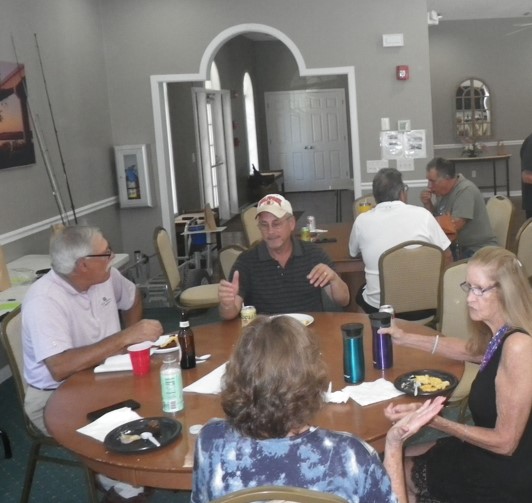
A Seafood Potluck and the 2nd Annual Seafood Challenge were both held jointly at the Pink Palace in the Sunset Beach Sea Trail Plantation on November 15th.

About 45 members and guests of the Sea Trail Fishing Club enjoyed the potluck and provided side dishes, entrees, and desserts. The Club also provided a shrimp boil.

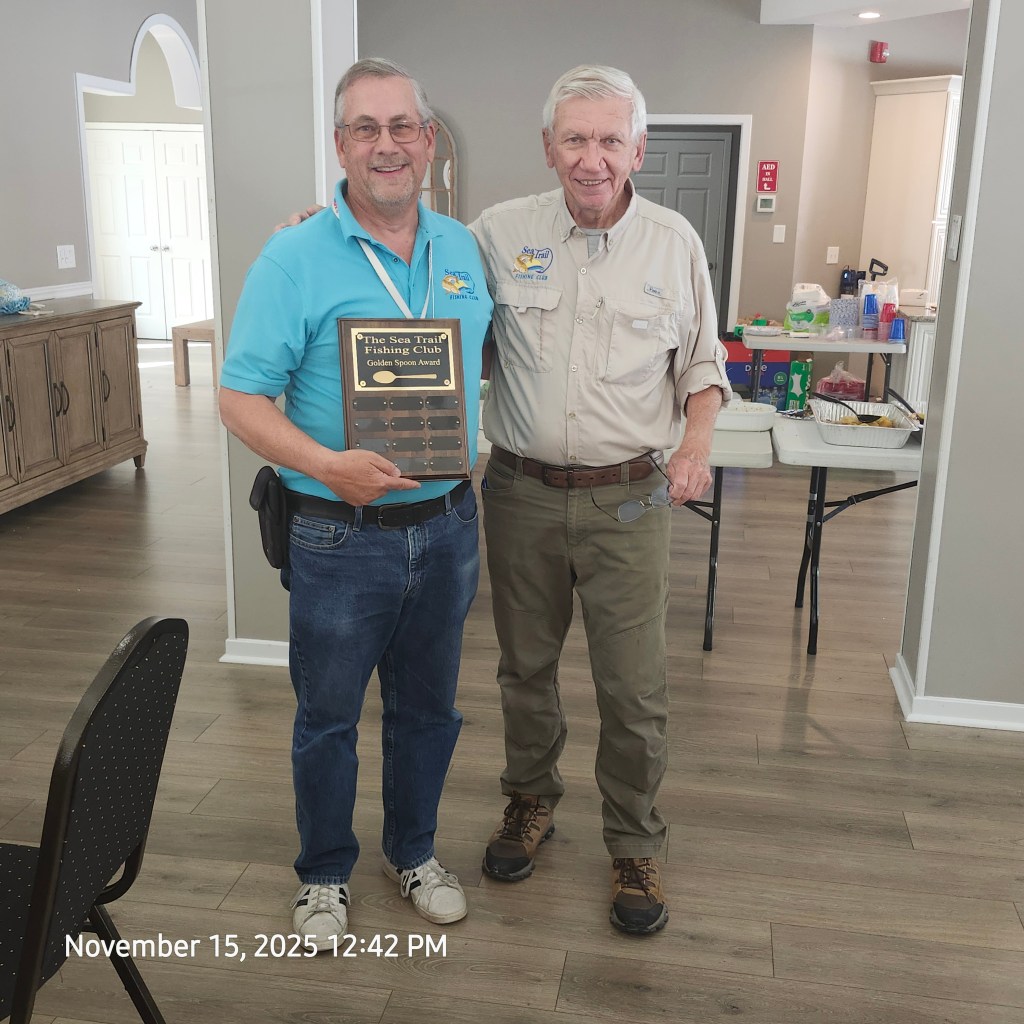
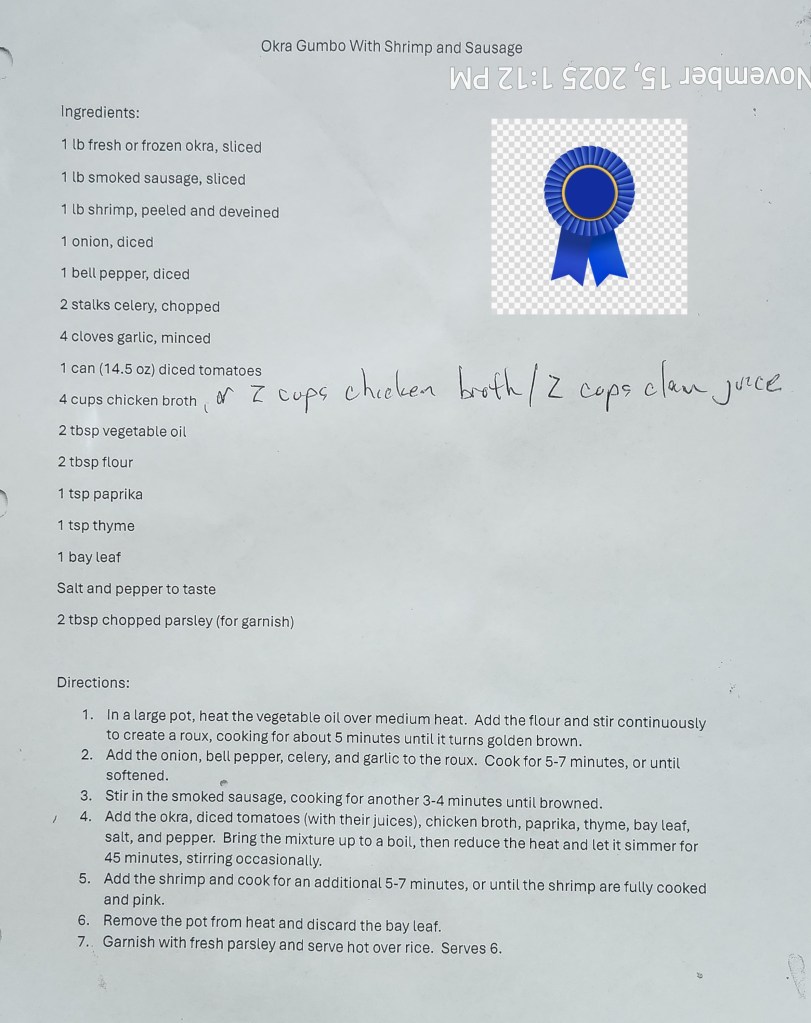
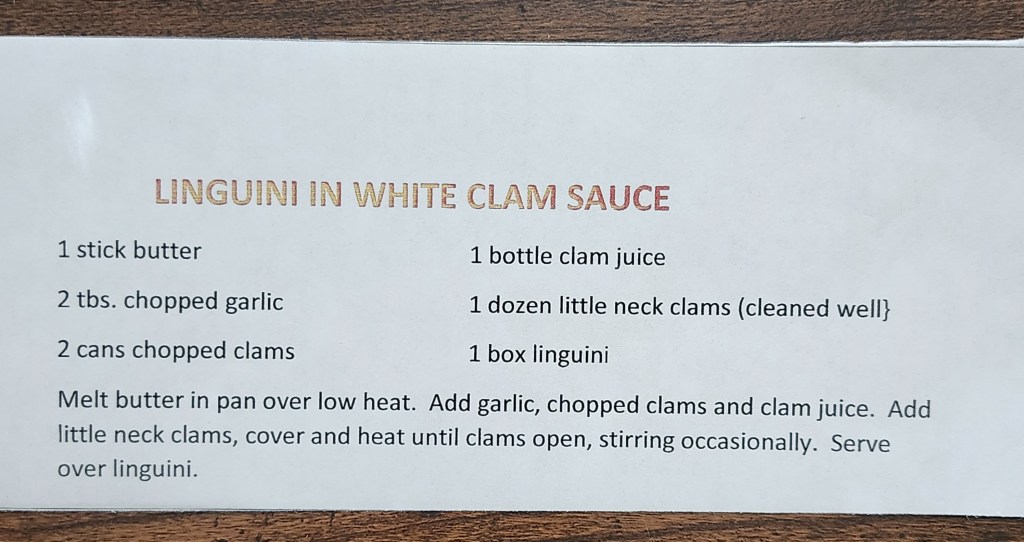
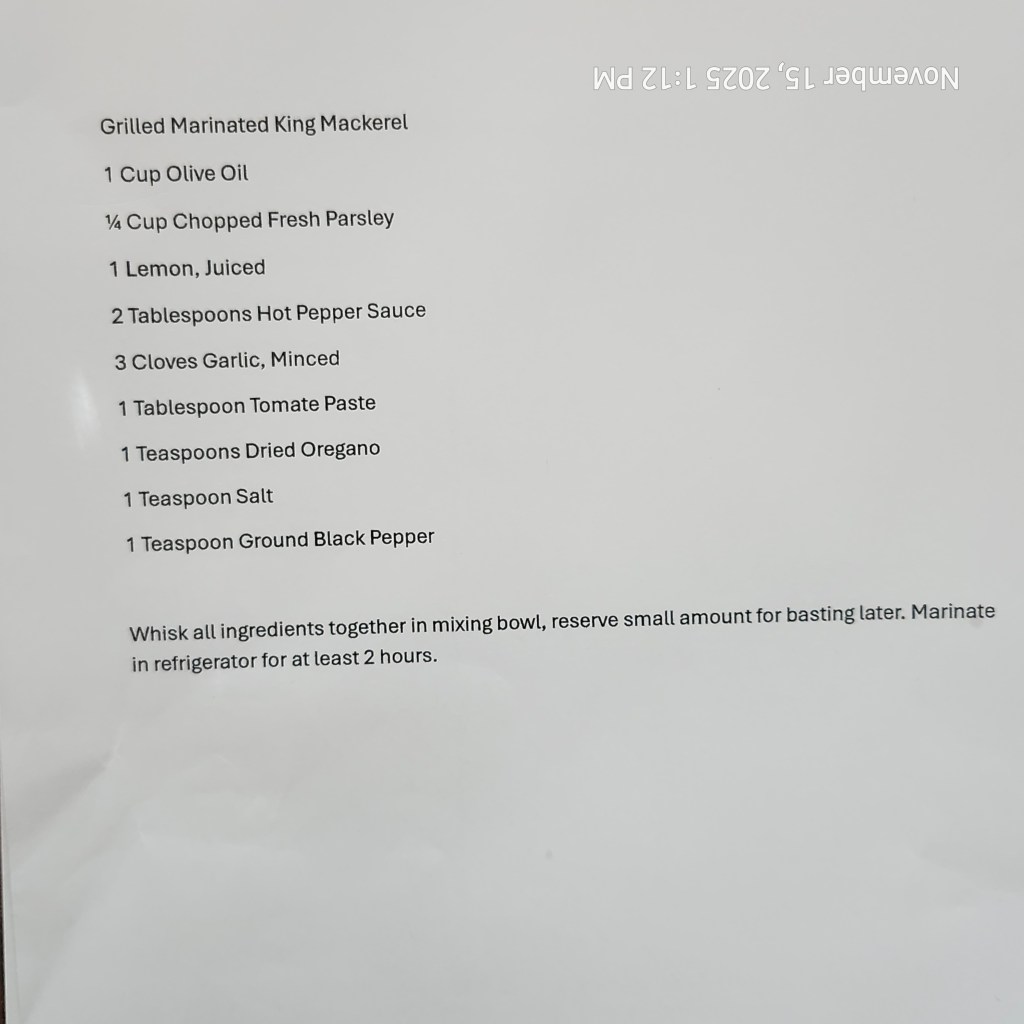
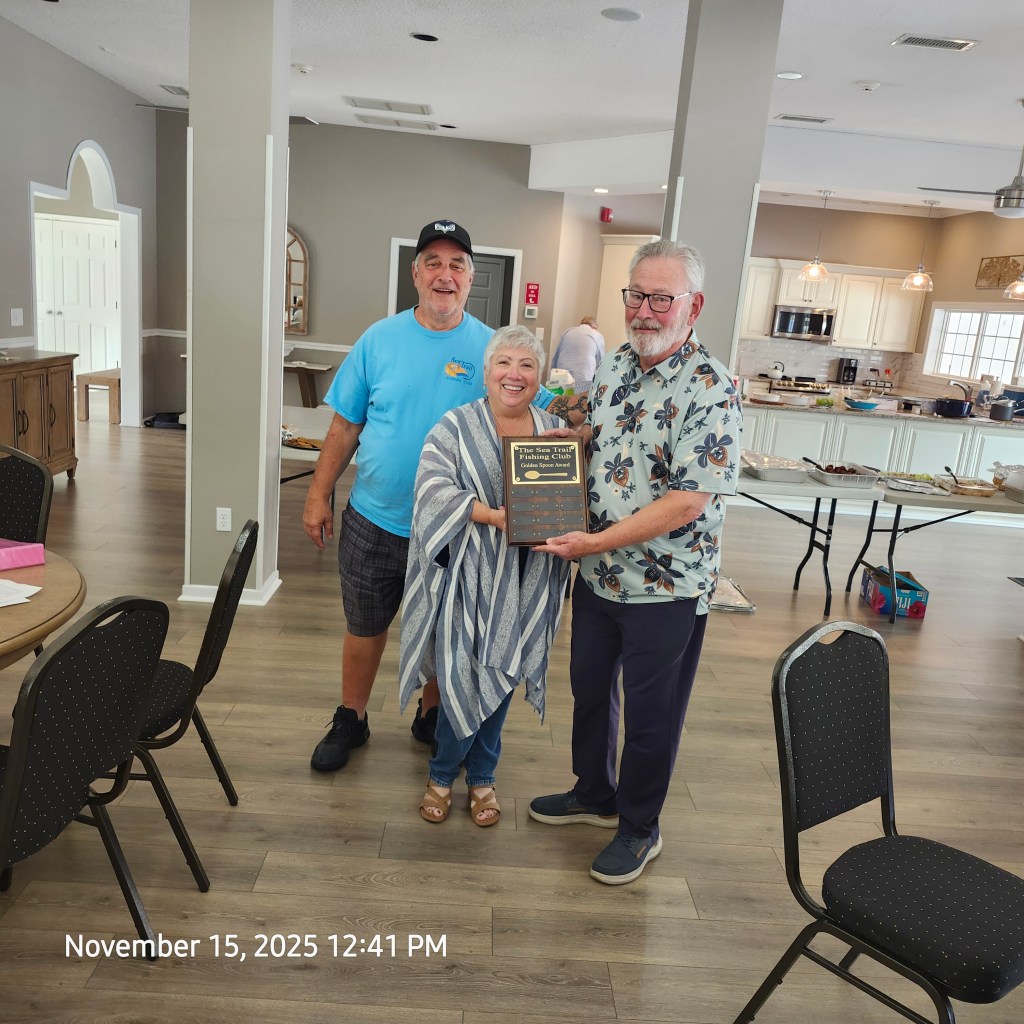
In addition, seven members provided entries to the Seafood Challenge. Recipes of several of the entrees are listed below. The competition was won by Alan Trojan for his ‘Okra Gumbo’, who was awarded the Golden Spoon. The Golden Spoon award was conceived by Laurie Thomas Vaas and as a perpetual award for years to come.

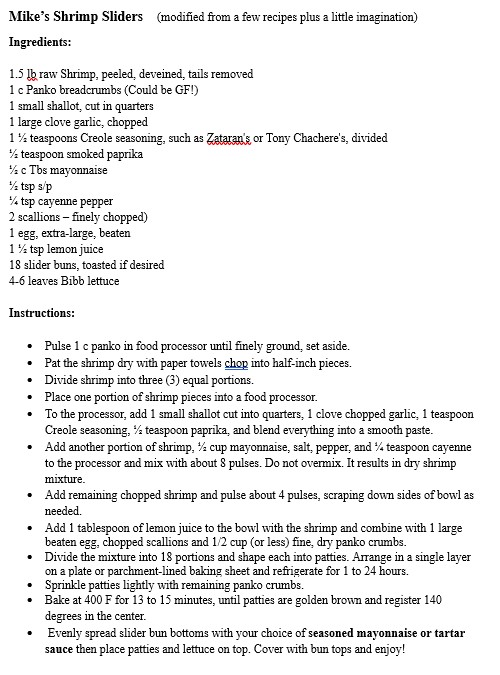
I squeezed out second-place finish with a Shrimp Slider entry, but judging was close and all of the entries were superb!

Here are a few of the submitted entries:

A big thank you top Our Judges