Members, 12 hour Offshore Bottom Fishing Trips on Saturday September 9th
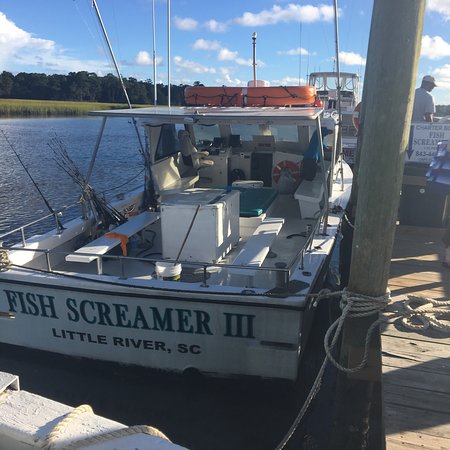
Captain Danny of the ‘Fish Screamer III‘ is planning monthly 12-hour Gulf bottom fishing trips again this year on board the Fish Screamer 3 out of Little River.
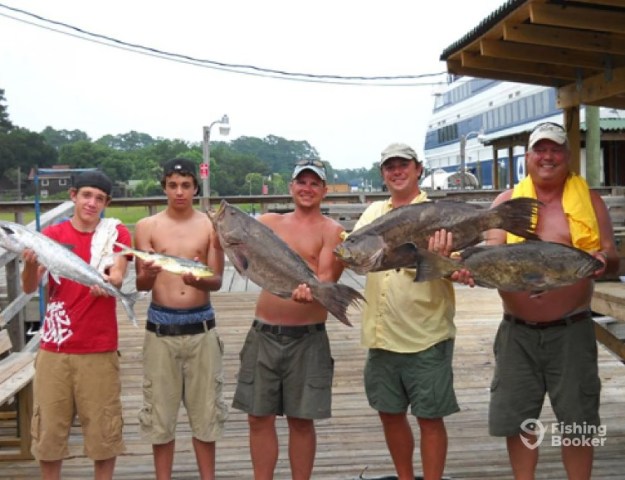
Last year every trip was a success, and the ice boxes were full of fish as the many pictures showed.
Below is a loosely plagiarized article published in the latest edition of Kayak Magazine, offering tips from Mark Anderson, a Texas Game Warden
1. Know Before You Go – If you’re coming to a boat ramp and it’s your first time out there, do a little bit of research online first to see if there’s any special rules or regulations. There might be signs posted that have any information on that body of water. Be observant of those as well.
2. Having Safety in Place Is Essential – First and foremost, make sure you have a lifejacket. If you’re going out alone or in a kayak, make sure you let somebody know where you’re going, when you expect to return, and how long you’re going to be gone. Also, if it’s early in the morning and it’s dark, make sure you have Coast Guard-approved lights if it’s going to be after sunset or before sunrise.”
3. Be Ready to Go Before You’re on the Ramp – Any boat ramp can get super busy. Having a plan, having everything ready, having everything loaded before you take up that space on the ramp—the more you can streamline that process, the easier it’s going to be for everybody.
4. Stay in Your Lane – If you’re at a boat ramp with two spots, try not to take up the whole thing by parking in the middle. Go to one side or the other. Be careful around trailers. Visibility is going to be reduced for those that are backing in a big boat, and a smaller boat or kayak is relatively harder to see by operators of bigger boats.
5. Clear the Ramp for Others – After boat is in the water, clear it from the path of the ramp so other people can use the ramp while you go back to park your vehicle. Make sure you move your craft out to the side so it doesn’t get hit.
6. Stop the Spread of Invasives to other Ramps and Water Bodies – If you fish or intend to fish on enclosed water bodies (lakes, ponds, upper rivers or creeks), clean, drain and dry your boat. It’s really important to help reduce the spread of aquatic nuisance or vegetation, or even fish disease.
7. Be Kind To One Another – Being mindful of others. Being patient with others and try to do things as safe as possible. Just understand that there are people of varying levels of experience that are going to be using the same ramp. Be ready to help somebody if they need help.
Southern Flounder Keeper Season for Public AnglersThe N.C. Division of Marine Fisheries announced on Wednesday the recreational flounder keeper season for this year will open at 12:01 a.m. Sept. 15 and close at 11:59 p.m. Sept. 29.
The two-week season will still limit public anglers to a one-fish per person, per day bag limit and a 15-inch minimum size limit for both hook-and-line and gig fisheries.Harvest of flounder with a Recreational Commercial Gear License will be prohibited.
The season and possession limits are set annually to keep the fishery within the recreational quota approved by the Marine Fisheries Commission in the N.C. Southern Flounder Fishery Management Plan Amendment 3. The plan also specifies any overage to the recreational Total Allowable Catch (TAC) requires a pound for pound payback subtracted from the following year’s allowable harvest. In 2022, the recreational TAC of 170,655 pounds was exceeded by 56,340 pounds. For 2023, this means the TAC for the recreational season will be 114,315 pounds. Discard mortality is accounted for in the estimates of TAC. During 2022, dead discards both during and outside of the southern flounder recreational season contributed significantly to the total removals from this fishery and the overage in the TAC. For this reason, the Division discourages anglers from targeting flounder for catch-and-release after they have caught their one-fish limit or when the season is closed. During the open season, the Division also discourages anglers from high-grading (retaining a fish until a larger one is caught) as this increases post-release mortality leading to additional dead discards.The commercial southern flounder seasons will be announced in a separate news release. Will the commercial proclamation also fully address discard mortality in the commercial fishing sector? How many juvenile flounder are killed in shrimp trawl nets each year? Will this be counted against the commercial TAC? Same for flounder discard mortality in crab pots?
The speckled trout bite is hot around the North and South Carolina borders in June. This is the peak of the spawn. There are plenty of smaller sows and males that are legal keepers but If you catch some of the big sows that are loaded with eggs it might be a good time to join the Fishing C.P.R. Club (as in Catch-Photograph-Release). As usual the favorite bait is shrimp and if you don’t have live shrimp, check out last week’s blog on artificials. Our Club President, Steve Heins, reports good success with Vudu Shrimp. One of the easiest ways to catch trout with live of artificial bait is under a popping cork. Adjust the depth of your leader to keep the bait suspended a little above the bottom. If using artificials and don’t hesitate to add scent and a couple of beads to get that clicking sound that live shrimp make. The cork going down makes it easy to see a strike, give it a second and set the hook! You just might also snag a redfish or two.
Hot spots are shell points in Dunn Sound and along the Little River jetties. Trout also gather around grassy points, creek mouths, oyster rocks and other places that concentrated baitfish and shrimp.
In the early morning or late afternoon trout feed most aggressively and topwater lures can be very effective and add a whole new dimension to fishing fun and excitement! Use the “walking the dog” retrieve and when you get a strike be sure to wait until you feel the weight of the fish before you set the hook Too fast on the hook set will result in a frustratingly low hook-up percentage.
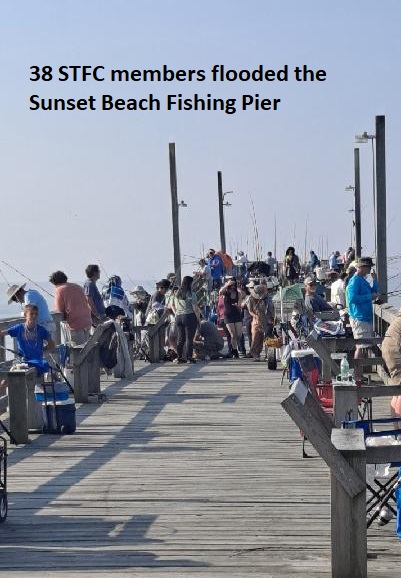
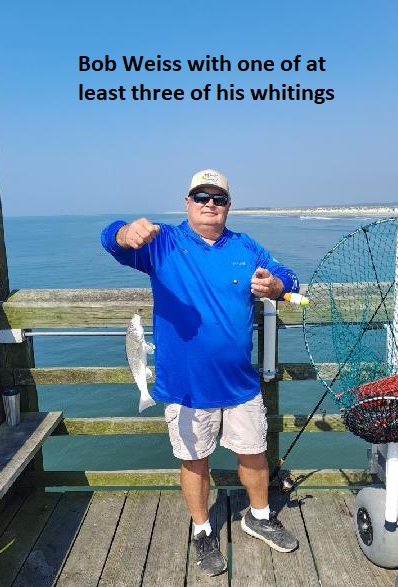
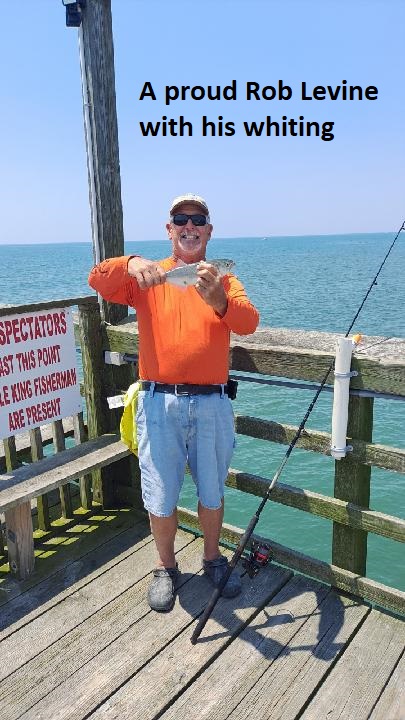
In case you missed it, last Saturday was the Annual Club Pier Fishing Event organized by Alan Trojan and the STFC Board of Directors. I arrived early for my very first try at pier fishing and landed a pompano in about two minutes. Bob Weiss, fishing near me caught a whiting soon after – he landed at least three before 9 AM..
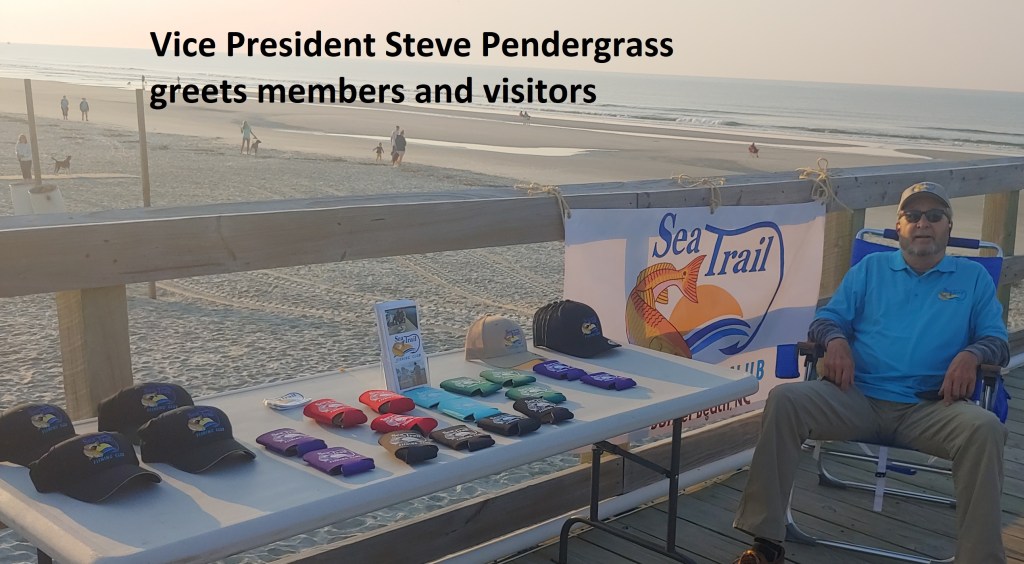
Steve Pendergrass was greeting members at the Club Sign-up table near the dock entrance and Michael Griffin, John Crespin and Brian Brumbaugh handed out live shrimp and/or provided photo ops. President, Steve Heins, Harold Golding and big Bill ‘Buck’ Trull worked the crowd and helped out where-ever needed as 38 of our STFC members took advantage of the great weather.
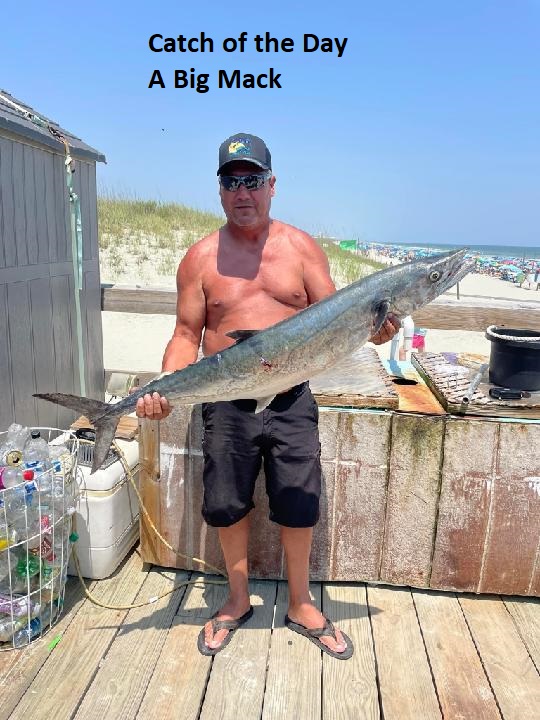
I didn’t realize it but North Carolina’s ocean piers are renowned for their excellent fishing. Key species caught in spring, summer and fall include spot, whiting, croaker, pompano, flounder, bluefish, black and red drum, speckled and grey trout, cobia, tarpon, sheepshead, Spanish and King mackerel and various species of shark. On Thursday, before the pier event, Michael Griffin caught a 19.5 inch king and on Saturday, at about 2:15 PM another angler caught a king that was just shy of 30 lbs.
So if you haven’t tried pier fishing and happened to have missed Saturday’s event, you just might want to consider trying a bit of pier fishing. Piers provide excellent ocean fishing access for anglers that have physical limitations, who don’t own a boat, or who are very young or old. Or even for folks like me who get a tad sea-sick when the waves get rough. Local piers include Holden Beach, Ocean Isle Beach and our own Sunset Beach. A special “Thank You” goes out to the Sunset Beach Pier owners, and STFC members, Gary and Teresa Massey, and to their staff for hosting this event!
The ‘general’ consensus is that live shrimp is the best and most universal inshore bait because shrimp are abundant in the inshore habitat and are universal prey for trout, redfish and flounder. It is also generally agreed that live shrimp are a more effective bait than artificial. Why?
As a kayak angler, my livewell options are limited. So if shrimp are the best bait, which artificial shrimp is best? Recently I have explored this question and herein are my conclusions. I started with the premise that, ‘If it looks like a duck, walks like a duck, and quacks like a duck, then it must be a duck. Or in this case: ‘If it looks like a shrimp, swims like a shrimp, sounds and smells like a shrimp, then most predators will decide that it must be a shrimp’.
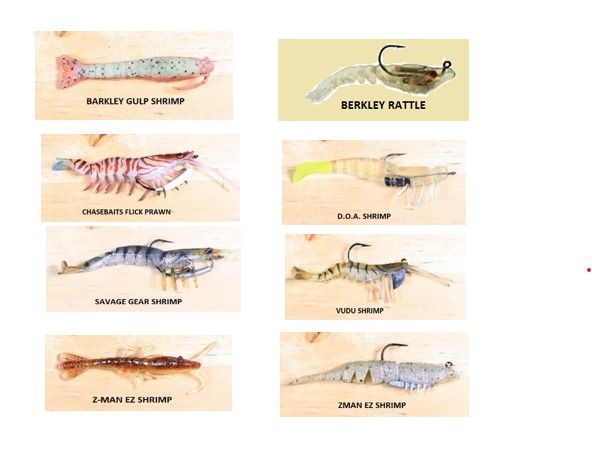
Does it Look like a shrimp? According to Wikipedia, shrimp are widespread and there are thousands of species that vary in size, shape and color. Popular shrimp baits are rather distinctive in shape but several vary in size and some have a wide range of colors. I think that the pre-rigged versions have the most realistic shape – but I am not a fish, so what do I know. The picture below includes a few of the most popular shrimp baits that you will find in local stores, so you can decide which ‘Looks’ the most realistic based on the local shrimp in this area!
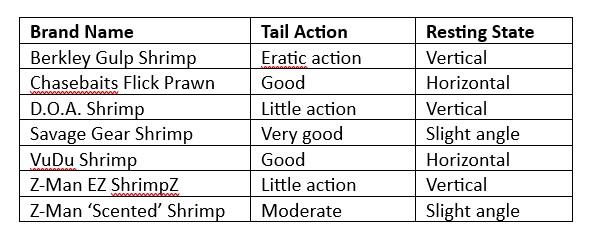
Does it Swim like a shrimp? In a SaltStrong article, (Best Shrimp Lures To Fish Under A Popping Cork [Brand Comparison] (saltstrong.com) ), Tony Acevedo looked at the action of shrimp baits under a popping cork by filming them in a swimming pool. He rated them based on their ‘action’ on the pop and how they settled in the water. A synopsis of his results in the chart below.
Does it Smell and Sound like a shrimp? As for smell, Berkley Gulp Shrimp and Z-Man Scented ShrimpZ are rated as having the best scent but anglers can add scents such as Pro-Cure and Dr. Juice when they think appropriate. I have found that Fishbites E-Z Shrimp strips are very effective with some lures, however, these may interfere with the action of the pre-rigged lures. Berkley and Vu-Du make shrimp baits with built-in rattles that may that attract fish. In addition, D.O.A. sells rattles that can be inserted into shrimp baits but I would suppose at the risk of affecting action. Also. there are rattles that can be attached ‘in-line’ to the leaders.
All -in-all, there are countless variations among the many shrimp lures. I am not endorsing any of these to work in any particular situation. As Abraham Lincoln once said, “With one lure, you cannot please all of the fish, all of the time”. You be the judge.

 Southern Flounder Keeper Season for Public AnglersThe N.C. Division of Marine Fisheries announced on Wednesday the recreational flounder keeper season for this year will open at 12:01 a.m. Sept. 15 and close at 11:59 p.m. Sept. 29.





You must be logged in to post a comment.