The Future of Speckled Trout in NC – an Opinion or Fact ?

https://www.youtube.com/watch?v=IwwSi9jhhw4 Fishing with Brewski

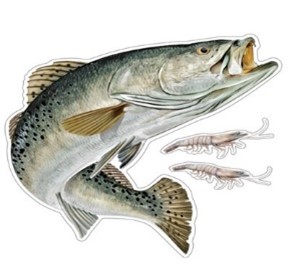
Speckled Trout fishing in North Carolina is about to receive more cuts in March of 2025. Having no recreational flounder season has caused many people to shift effort to speckled trout across rec and comm sectors and as a result, the stock is now overfished. This video covers statements made by the commercial representatives at the speckled trout advisory committee.

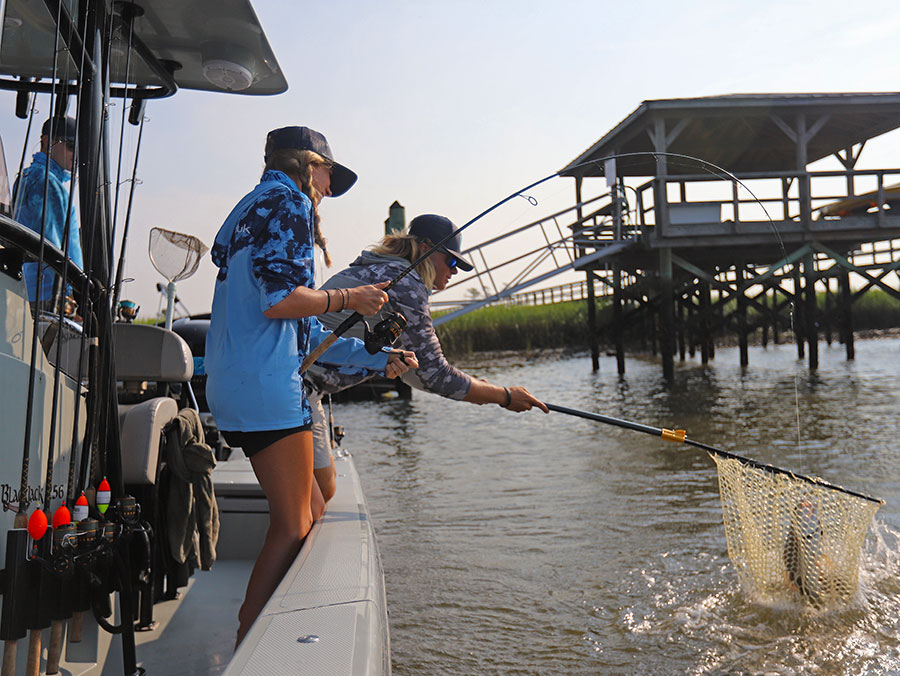
How to Properly Net a Fish …

Published JULY 18, 2024

Your fishing partner has hooked into a great fish and yells, “get the net!”

It’s your chance to go from unsung hero to zero. Net the fish successfully, and you’ll likely never get a great deal of credit. Botch the job, and you’ll never live it down.

Don’t worry, it’s not that complicated, as long as you don’t make it complicated. It’s as simple as dipping the net into the water, then waiting on the angler to guide the fish into it.

That’s it. Dip the net in, wait on the angler to guide the fish in, then lift it out of the water.

It’s easy to get it right. And it’s just as easy to get it wrong, if you try to do too much.

What you don’t want to do is follow the fish around with the net, stab at the fish, or lunge the net at it.

When it’s all going well and the angler has the fish right at the net, but then the fish quickly turns or jumps, just wait. It’s tempting here to try and “save the day” by swooping the fish out of the water. But as likely as not, you’ll push the fish in the tail, which may give it just the boost it needs to spring free.

Avoid the temptation, and simply keep the net in the water and wait. It’s up to the angler to guide the fish back to the net, and the last thing the net man needs to do is start sweeping and swooping at the water, just trying to luck into netting the fish.

Exceptions

Like most rules in life, some exceptions are warranted, but they are few and far between.

One exception is when you can see the fish is barely hooked. When a lunker bass is near, and you can tell the hook is holding on to just the slightest piece of skin, it might be worth it to make a move with the net.

And if you’re reeling in a fish that could tangle itself in a drift sock, or around a nearby tree or other brush, you might save yourself some trouble by getting a little aggressive with the net.

In those situations, you just need to accept the fact that you might knock the fish free, or it might simply get free on its own. And you also need to accept that sometimes, the angler just isn’t going to guide the fish into the net properly, the fish will shake free, and you’ll be wondering if you could have done more.

But most of the time, as long as you simply put the net in the water and wait as the angler guides the fish into it, you’ll get the fish in the boat and won’t be the scapegoat that ruined the day.

Tight lines 🎣
New recreational, commercial harvest reporting requirements delayed to Dec. 1, 2025

        July 12, 2024   New recreational, commercial harvest reporting requirements delayed to Dec. 1, 2025   MOREHEAD CITY – New harvest reporting requirements for recreational and commercial fisheries have been delayed by one year and will now become effective on Dec. 1, 2025.   The N.C. General Assembly recently passed Session Law 2024-45, which, in part, amends legislation from last fall that would have implemented the harvest reporting requirements on Dec. 1, 2024.   This extension will allow the N.C. Department of Environmental Quality’s Division of Marine Fisheries (DMF) and the N.C. Wildlife Resources Commission (WRC) to engage with stakeholders, not only to inform them about the requirements, but also to ensure that the reporting process and tool(s) are robust and user-friendly.   The legislation from last fall requires that any person who recreationally harvests Red Drum, flounder, Spotted Seatrout (speckled trout), Striped Bass and Weakfish (gray trout) must report that harvest to the DMF. This requirement applies to fish harvested from coastal fishing waters, joint fishing waters and inland fishing waters adjacent to coastal or joint fishing waters.   Additionally, the law requires anyone holding a commercial fishing license who is engaged in a commercial fishing operation to report all fish harvested to DMF, regardless of sale.   More information, including links to temporary rules to implement the laws, can be found on the Mandatory Harvest Reporting webpage at https://www.deq.nc.gov/mandatory-harvest-reporting. The webpage will continue to be updated as new information becomes available.

For More Information:   DMF Contact: Patricia Smith Phone: 252-515-5500   https://www.deq.nc.gov/dmf   P.O. Box 769, 3441 Arendell St., Morehead City N.C. 28577 WRC Contact: Fairley Mahlum Phone: 919-707-0180   https://www.ncwildlife.org 1701 Mail Service Center Raleigh, NC 27699-1700     NC Division of Marine Fisheries | 3441 Arendell Street | Morehead City, NC 28557 US   Unsubscribe | Update Profile | Constant Contact Data Notice
July 12, 2024 e-mail from NCDMF dmfnews@deq.nc.gov

TAKE NOTE THAT NONE OF THE HYPERLINKS ARE “HOT.” IF YOU WANT TO FOLLOW A HYPERLINK, “COPY & PASTE” INTO YOUR BROWSER SEARCH BAR.

🎣

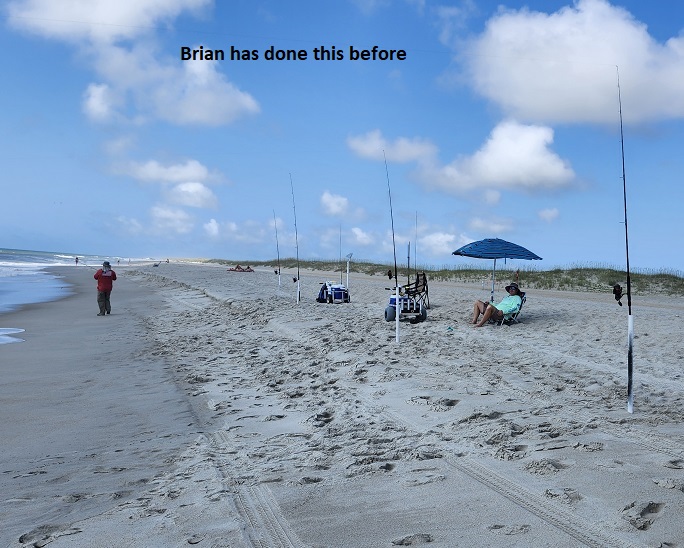
Surf Fishing at Fort Fisher

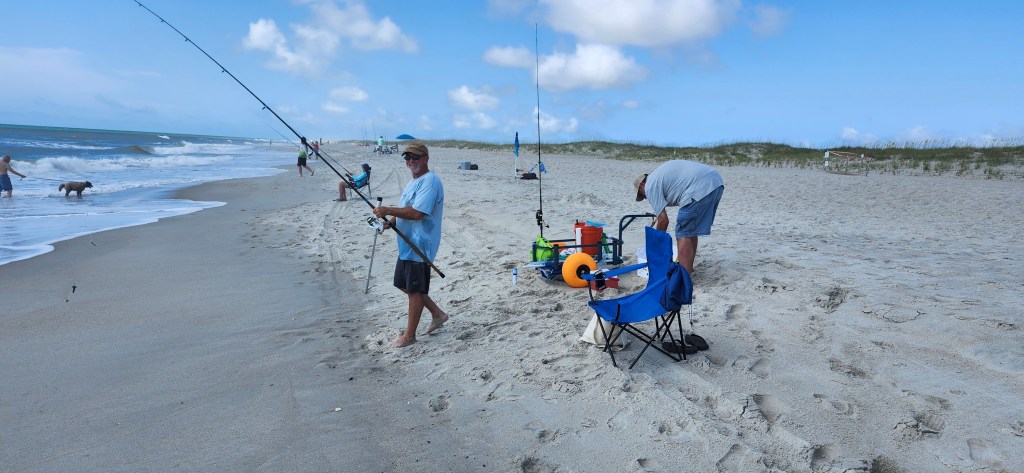
A great turnout for the yesterday’s Surf Fishing foray. Seven members from the Sea Trail Fishing Club joined three members and a guest from Seacoast Anglers for a “How-To” hosted by Bob White (who is actually a member of both clubs). Bob brought live bait and helped us novices with tips for catching our own live bait and showing us how to rig up to catch the big ones out in the surf.

Not so sure that Bob arranged to have the big ones show up for this event. A lot of small fry were caught but a few of the really big one’s got away. I almost had a rod pulled out into the surf. It was saved by a nearby beach jogger! And Brian lost an unidentified lunker that broke off a 40-lb shock leader.

No matter. A good time was had by all and everyone learned a little more about fishing from the beach. (Man! I’ve got to get a better sand spike).

If you missed this one, Bob has promised to hold another clinic in the near future – perhaps on Ocean Isle Beach.

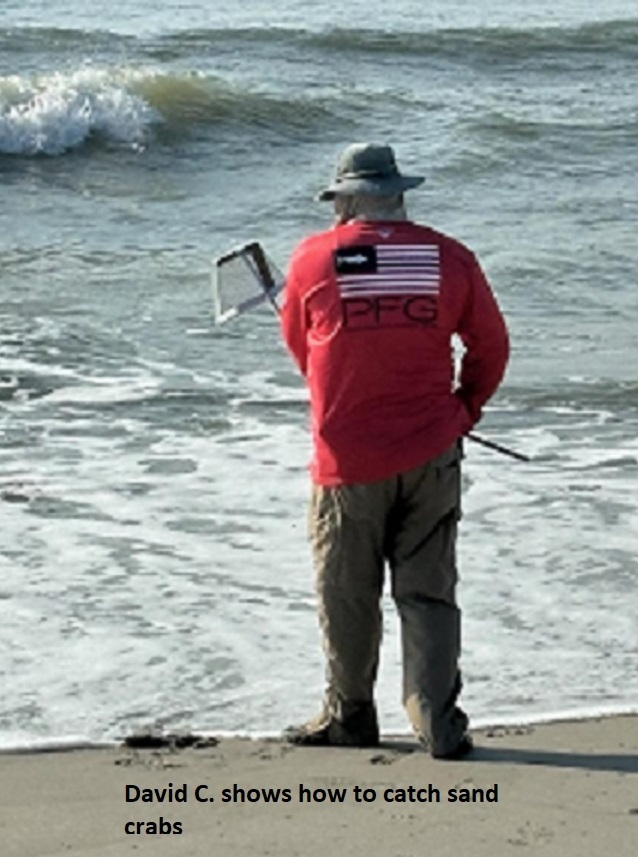
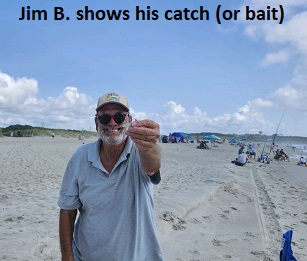
Thanks to our members who showed up for this event – Jim ad Margaret Baumgartner, Ken and Laura Birchett, Dave Cannon the crab catcher, and Brian Brumbaugh. Oh yes, let me not forget, Bob White.

SURF FISHING GEAR AND WEAR

My conversation with Bob White:

Bob suggests having more than one rod and accompanying sand spikes. For bait: something like a small 5 to 6 ft spinning rod with a 1000 series reel can be rigged with two very small hooks in tandem and used to catch bait fish. Bob suggested live shrimp as the best bait with a 1 -oz sinker, but I am sure that other options would work too. Maybe even a small flashy spoon or spinner bait. Casts are made out 12 to 15-ft into the surf to catch the bait fish. This alone can be fun! An alternative is frozen bait.

Cut bait fish are then used on 9 to 12-ft surf rods with 4000 to 6000 series reels and 4 to 6-oz sinkers. Once the rod is placed into the spike, setting the drag is critical to avoid losing a rod and reel into the surf!

My two-cents worth: I am not a surf fishing expert but I read a lot and after looking at a book or two and, yes, several on-line articles, I noticed that almost all are in disagreement on one point or another. But in a nutshell, here is my own assessment.

Rods and Reels – These need to be a bit more robust than what I typically use for inshore fishing. How much depends on the fish species and size that prowls in the section of the ocean where you are fishing. Rods need to be longer and stronger, 8 to 10-ft seems to be a good average. They should have enough backbone to cast a heavy 3 to 5-lb sinker and a hook loaded with a chunk of bait. Reels need to be in the 4000 to 6000 range with a large line capacity in case you hook that big one – 300 to 500 yards seems to be a sweet spot.

Terminal Tackle – I have heard pros and cons for both braid and monofilament line in the 30 to 50-lb test range. You can get more line on the reel with braid, but it is more prone to wind knots and can result in a nasty cut if you grab the line at the wrong time. It is also more expensive. Fish finder or float rigs work well and although fresh bait is best, frozen shrimp, mullet, and squid will suffice.

Miscellaneous Gear – A sand spike is a necessity unless you want to stand up holding the rod for 3 hours. Add to that, various knives, pliers, and a towel. A bucket to carry everything in is useful and can be used as a convenient seat. Also, don’t forget plastic bags for various things including your cellphone and/or camera. A

Clothing – For this kind of weather, bare feet or sand shoes and shorts will suffice unless you want to wade out into the surf. A hat and sunscreen are also necessities.

For more details on Surf Fishing 101, check out Andrew Courtillet’s article: