
Courtesy Hunter Cook Columnist
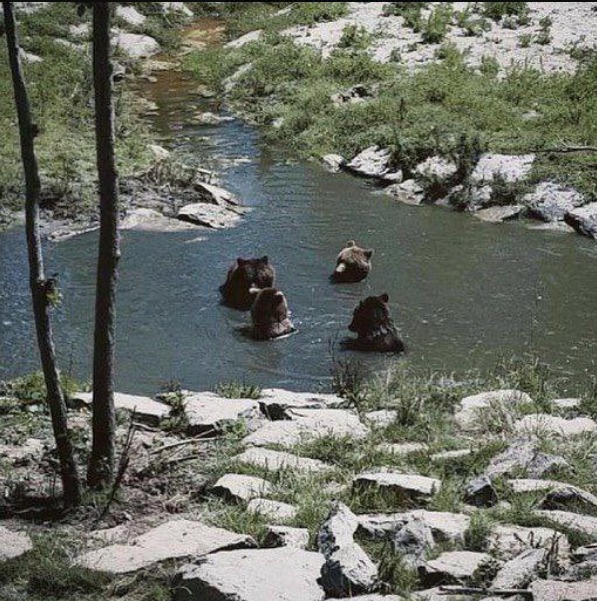
Off the Grid Adventure
https://www.carolinasportsman.com/columns/off-the-grid/hazel-creek-a-unique-off-the-grid-adventure/
Courtesy Hunter Cook Columnist
Off the Grid Adventure
https://www.carolinasportsman.com/columns/off-the-grid/hazel-creek-a-unique-off-the-grid-adventure/
͏ ͏ ͏ ͏ ͏ ͏ ͏ ͏ ͏ ͏ ͏ ͏ ͏ ͏ ͏ ͏ ͏ ͏ ͏ ͏ ͏ ͏ ͏ ͏ ͏ ͏ ͏ ͏ ͏ ͏ ͏ ͏
February 13, 2026  Good morning, and welcome to Coastal Insights—our foundation’s weekly publication delivering reliable updates on the key developments shaping North Carolina’s fisheries. Introducing the Oyster Series Over the coming weeks, we’ll take a closer look at one of North Carolina’s most important and most misunderstood coastal species: the eastern oyster. Good morning, and welcome to Coastal Insights—our foundation’s weekly publication delivering reliable updates on the key developments shaping North Carolina’s fisheries. Introducing the Oyster Series Over the coming weeks, we’ll take a closer look at one of North Carolina’s most important and most misunderstood coastal species: the eastern oyster.  Oysters have shaped our estuaries for centuries. They’ve supported working waterfronts, filtered our waters, and built reefs that shelter fish and crabs. Today, they sit at the center of important conversations about coastal economies, water quality, public trust waters, and the future of our fisheries. This series will explore the full story. We’ll examine the remarkable life cycle of an oyster, including some surprising biological traits few people know about. We’ll look at the differences between wild harvest and cultured production, share the latest economic trends shaping the industry in North Carolina and across the country, and discuss why water quality remains inseparable from oyster success. Whether you harvest them, grow them, study them, eat them, or simply value clean water and thriving estuaries, oysters connect us all. Part 1: Nature’s Estuary Engineer Few species tell the story of our coast like the oyster. Once so abundant that reefs were navigational hazards, oysters helped shape North Carolina’s estuaries and the communities built around them. They fed families, sustained working waterfronts, and formed the backbone of coastal economies. Historic oyster reefs once spanned tens of thousands of acres throughout North Carolina’s estuaries. Modern mapping has identified roughly 22,000 acres of shell bottom in coastal waters, a tangible reminder of what was and what restoration hopes to rebuild. Over time, habitat loss, water quality challenges, and intense harvest pressure dramatically reduced wild oyster populations. Yet today, oysters are at the center of one of the most hopeful stories in coastal restoration and sustainable seafood. Oysters do more than live in estuaries; they build them. Oysters have shaped our estuaries for centuries. They’ve supported working waterfronts, filtered our waters, and built reefs that shelter fish and crabs. Today, they sit at the center of important conversations about coastal economies, water quality, public trust waters, and the future of our fisheries. This series will explore the full story. We’ll examine the remarkable life cycle of an oyster, including some surprising biological traits few people know about. We’ll look at the differences between wild harvest and cultured production, share the latest economic trends shaping the industry in North Carolina and across the country, and discuss why water quality remains inseparable from oyster success. Whether you harvest them, grow them, study them, eat them, or simply value clean water and thriving estuaries, oysters connect us all. Part 1: Nature’s Estuary Engineer Few species tell the story of our coast like the oyster. Once so abundant that reefs were navigational hazards, oysters helped shape North Carolina’s estuaries and the communities built around them. They fed families, sustained working waterfronts, and formed the backbone of coastal economies. Historic oyster reefs once spanned tens of thousands of acres throughout North Carolina’s estuaries. Modern mapping has identified roughly 22,000 acres of shell bottom in coastal waters, a tangible reminder of what was and what restoration hopes to rebuild. Over time, habitat loss, water quality challenges, and intense harvest pressure dramatically reduced wild oyster populations. Yet today, oysters are at the center of one of the most hopeful stories in coastal restoration and sustainable seafood. Oysters do more than live in estuaries; they build them.  A single adult oyster can filter up to 50 gallons of water per day under ideal conditions, removing excess nutrients and suspended particles. Over time, clusters of oysters form reefs that create hard structure in otherwise soft-bottom waters. These reefs shelter juvenile fish and crabs, support shrimp populations, and help buffer shorelines from wave energy. At the same time, consumer demand for oysters continues to grow nationwide. Oyster mariculture—the cultivation of oysters in coastal waters—is expanding in nearly every U.S. region. Cultured production now represents the most valuable sector of marine aquaculture in the country. A single adult oyster can filter up to 50 gallons of water per day under ideal conditions, removing excess nutrients and suspended particles. Over time, clusters of oysters form reefs that create hard structure in otherwise soft-bottom waters. These reefs shelter juvenile fish and crabs, support shrimp populations, and help buffer shorelines from wave energy. At the same time, consumer demand for oysters continues to grow nationwide. Oyster mariculture—the cultivation of oysters in coastal waters—is expanding in nearly every U.S. region. Cultured production now represents the most valuable sector of marine aquaculture in the country.  Here in North Carolina, both public reef harvest and private lease production play important roles. Wild oysters connect us to heritage and tradition. Cultured oysters help meet rising demand and provide economic stability for coastal communities. Together, they generated $8.15 million in dockside sales in 2024, the highest value on record. In this series, we’ll explore how oysters grow, how they support clean water, how cultured production works, and how the oyster economy is transforming both nationally and here at home. Oysters are more than seafood on ice. They are living infrastructure, and one of the clearest examples of how conservation and coastal livelihoods can move forward together. Next week: Wild harvest and cultured oysters, two paths to the same plate. Hooked on a Feeling: Inside the Fish Heart Valentine’s Day isn’t just for humans. It’s also a chance to marvel at the diversity of hearts throughout the animal kingdom, especially beneath the waves. Here in North Carolina, both public reef harvest and private lease production play important roles. Wild oysters connect us to heritage and tradition. Cultured oysters help meet rising demand and provide economic stability for coastal communities. Together, they generated $8.15 million in dockside sales in 2024, the highest value on record. In this series, we’ll explore how oysters grow, how they support clean water, how cultured production works, and how the oyster economy is transforming both nationally and here at home. Oysters are more than seafood on ice. They are living infrastructure, and one of the clearest examples of how conservation and coastal livelihoods can move forward together. Next week: Wild harvest and cultured oysters, two paths to the same plate. Hooked on a Feeling: Inside the Fish Heart Valentine’s Day isn’t just for humans. It’s also a chance to marvel at the diversity of hearts throughout the animal kingdom, especially beneath the waves.  Fish hearts aren’t simply slower versions of ours; they’re finely tuned engines shaped by cold water, long migrations, sudden bursts of speed, and life in low-oxygen environments. Unlike mammals, most fish have a two-chambered heart—one atrium and one ventricle—arranged in a loop. Blood flows from the heart to the gills to collect oxygen, then out to the body and back again. But simple doesn’t mean boring. Off North Carolina’s coast, bluefin tuna move like living torpedoes. Built for endurance and speed, they have large, muscular hearts capable of powerful contractions. In colder waters, their heart rates can climb toward 200 beats per minute to meet the oxygen demands of long migrations and explosive chases. Here’s the twist: bluefin are partially warm-bodied, keeping parts of their muscles warmer than the surrounding water while their hearts remain at ambient temperature. Even so, their cardiovascular systems perform efficiently from chilly Cape Hatteras waters to warmer offshore currents. Closer to shore, species such as flounder, red drum, and striped bass live differently. Their heart rates are slower, rising when feeding or escaping predators. Cold winter waters can slow rhythms dramatically, which is one reason why sudden temperature swings can stress coastal fish species. Some marine creatures take things even further. The deep-sea hagfish have a primary heart plus several accessory pumping structures that move blood through their low-pressure circulatory system. Octopuses have three hearts—two for the gills, one for the body. Heart design tells a story of habitat, temperature, and survival. So while candy and flowers steal the spotlight this Valentine’s Day, remember, some of the most remarkable hearts are beating beyond the shoreline. Fish hearts aren’t simply slower versions of ours; they’re finely tuned engines shaped by cold water, long migrations, sudden bursts of speed, and life in low-oxygen environments. Unlike mammals, most fish have a two-chambered heart—one atrium and one ventricle—arranged in a loop. Blood flows from the heart to the gills to collect oxygen, then out to the body and back again. But simple doesn’t mean boring. Off North Carolina’s coast, bluefin tuna move like living torpedoes. Built for endurance and speed, they have large, muscular hearts capable of powerful contractions. In colder waters, their heart rates can climb toward 200 beats per minute to meet the oxygen demands of long migrations and explosive chases. Here’s the twist: bluefin are partially warm-bodied, keeping parts of their muscles warmer than the surrounding water while their hearts remain at ambient temperature. Even so, their cardiovascular systems perform efficiently from chilly Cape Hatteras waters to warmer offshore currents. Closer to shore, species such as flounder, red drum, and striped bass live differently. Their heart rates are slower, rising when feeding or escaping predators. Cold winter waters can slow rhythms dramatically, which is one reason why sudden temperature swings can stress coastal fish species. Some marine creatures take things even further. The deep-sea hagfish have a primary heart plus several accessory pumping structures that move blood through their low-pressure circulatory system. Octopuses have three hearts—two for the gills, one for the body. Heart design tells a story of habitat, temperature, and survival. So while candy and flowers steal the spotlight this Valentine’s Day, remember, some of the most remarkable hearts are beating beyond the shoreline.   The North Carolina Marine & Estuary Foundation, Inc. is a 501 (c)(3) non-profit organization (EIN 83-0893015). Contributions to the North Carolina Marine & Estuary Foundation are tax-deductible to the extent allowed by law. You can update your preferences or unsubscribe. The North Carolina Marine & Estuary Foundation, Inc. is a 501 (c)(3) non-profit organization (EIN 83-0893015). Contributions to the North Carolina Marine & Estuary Foundation are tax-deductible to the extent allowed by law. You can update your preferences or unsubscribe. |
 Feb. 16, 2026 Spring Gulf Flounder season opens March 9 MOREHEAD CITY Feb. 16, 2026 Spring Gulf Flounder season opens March 9 MOREHEAD CITYThe North Carolina Department of Environmental Quality’s Division of Marine Fisheries will open a two-week, spring recreational Gulf Flounder season in ocean waters off the central and southeastern parts of coastal North Carolina. Season Details: Dates: March 9–22, 2026 Location: Ocean waters only, from north end of Portsmouth Island (south of Ocracoke Inlet) to the South Carolina line. See map. Gear: Recreational hook-and-line only Bag Limit: One fish per person per day Size Limit: Minimum 15-inch total length For more specific information, see Proclamation FF-13-2026. Why these regulations: Anglers primarily catch three flounder species in North Carolina waters: Southern, Summer and Gulf. Historically, North Carolina has managed all three species as one in the recreational flounder fishery. The latest stock assessment indicates that Southern Flounder is overfished and overfishing is occurring. Overfished means the population is too small, and overfishing means the removal rate is too high. For this reason, the state has placed strict regulations on flounder to limit Southern Flounder catch. Amendment 4 to the Southern Flounder Fishery Management Plan does include a provision that allows for a spring recreational Gulf and Summer Flounder season for hook-and-line fishing in the ocean. The spring season was included in the plan to provide recreational fishermen with opportunity to harvest Summer and Gulf Flounder during a time when they are less likely to catch Southern Flounder. North Carolina cannot open a spring season for Summer Flounder, which is jointly managed by the federal Mid-Atlantic Fishery Management Council and the Atlantic States Marine Fisheries Commission. These entities require that recreational Summer Flounder regulations remain at status quo in 2026 and 2027 based on harvest estimates compared to the recreational harvest limit, and the stock’s biomass estimate compared to the biomass target. This means that North Carolina’s recreational Summer Flounder season in 2026 and 2027 must align with the fall flounder season. Summer Flounder range in distribution from Massachusetts to Florida but are most abundant from southern New England to Hatteras Island, N.C. Gulf Flounder range from North Carolina through the Gulf of Mexico. Along the Atlantic Coast, Gulf Flounder become more abundant as you move south. The Division considered these distribution ranges in choosing the area that will open for harvest of Gulf Flounder while limiting the probability of catching Summer Flounder. Flounder identificationThe Gulf Flounder has the same, familiar flat, rounded body and olive-brown color of other flounders that can change shade depending on the color of the bottom. It has three prominent, ocellated dark spots arranged in a triangle on its eyed side. One spot is above and one is below the lateral line while the third is in the middle of the line towards the tail, forming a triangle. The spots may become obscure in larger fish. Information on how to identify a Gulf Flounder from a Summer Flounder and a Southern Flounder can be found on the Division’s Flounder Identification webpage. Other information can be found on the Spring Gulf Flounder Season Frequently Asked Questions page. If there is incidental harvest of Southern Flounder during spring 2026, it will count against the annual quota. Correct identification will be key in minimizing any effects on a future fall flounder season. The Division encourages anglers to release flounder if they are not sure of the species. Reporting requirements A new state law requires anglers to report their harvest of flounder, as well as Striped Bass, Spotted Seatrout, Weakfish (gray trout), and Red Drum to the Division. Learn more about this harvest reporting requirement. This reporting requirement does not replace the Marine Recreational Information Program. The Marine Recreational Information Program is still the best available scientific method of collecting recreational fishing information in a representative manner, and anglers are strongly encouraged to participate in the interviews. For More Information Contact: Patricia Smith Phone: 252-515-5500 Website: https://www.deq.nc.gov/dmf Facebook: https://www.facebook.com/NCMarineFisheries Instagram: https://www.instagram.com/NC_DMF Twitter: https://twitter.com/NC_DMF P.O. Box 769, 3441 Arendell St., Morehead City N.C. 28557 Share / View as a webpage |
Stay Connected with North Carolina Department of Environmental Quality:      SUBSCRIBER SERVICES: SUBSCRIBER SERVICES:Manage Subscriptions | Unsubscribe All | Help |
| This email was sent to slpender2@gmail.com using govDelivery Communications Cloud on behalf of: North Carolina Department of Environmental Quality · 217 West Jones Street · Raleigh, NC · 27603 |

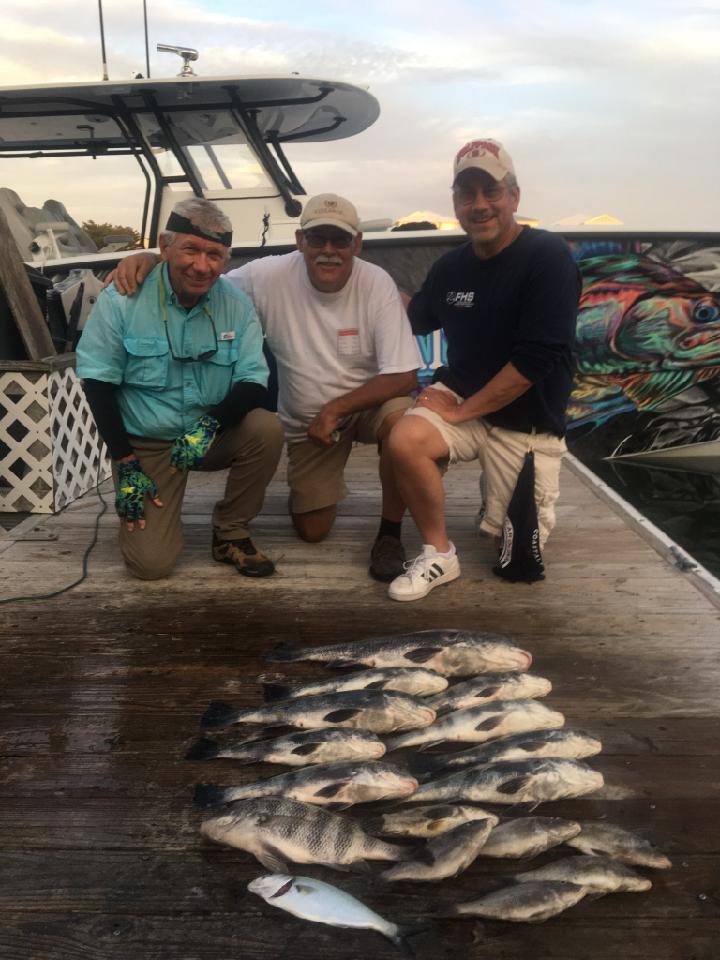
After a long illness, the Sea Trail Fishing Club has lost one of their most cherished and respected members. Larry Hershoff was one of the first members in our organization and a member of our Finance Team. Larry has fished with more than a few of you and was also active in the local government in Sunset Beach, the Sea Trail Men’s Golf Association and several other ad hoc groups such as Thursday Evening Bridge. A loved and respected member, Larry will be missed.
For more information about Larry and future services:
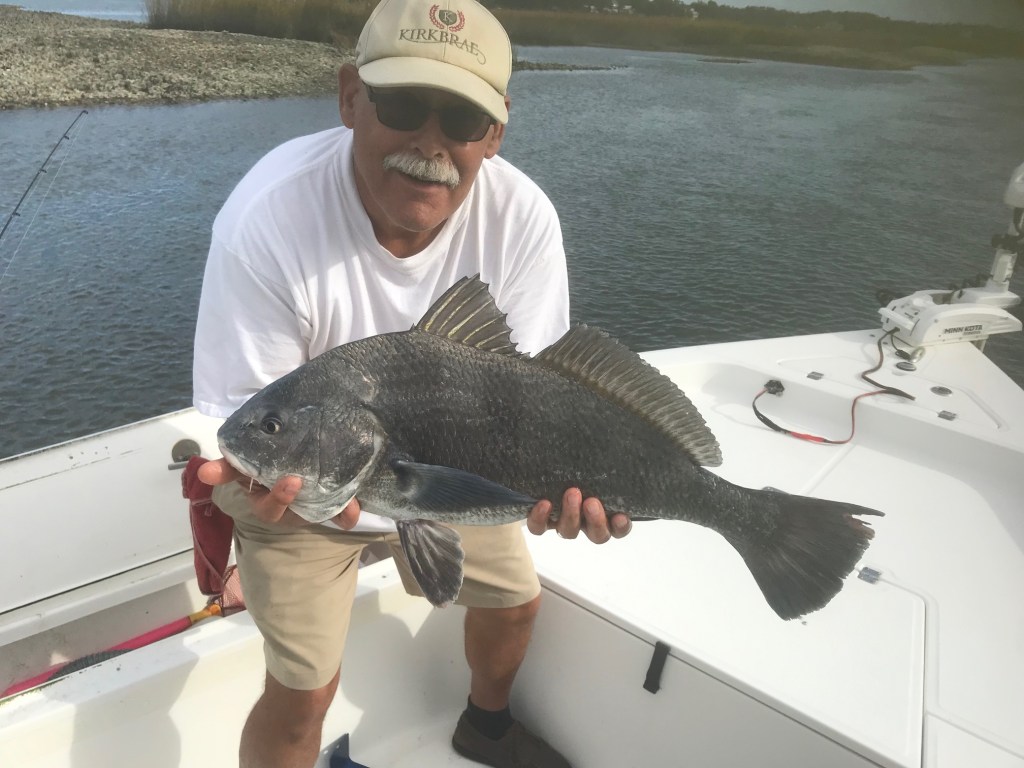
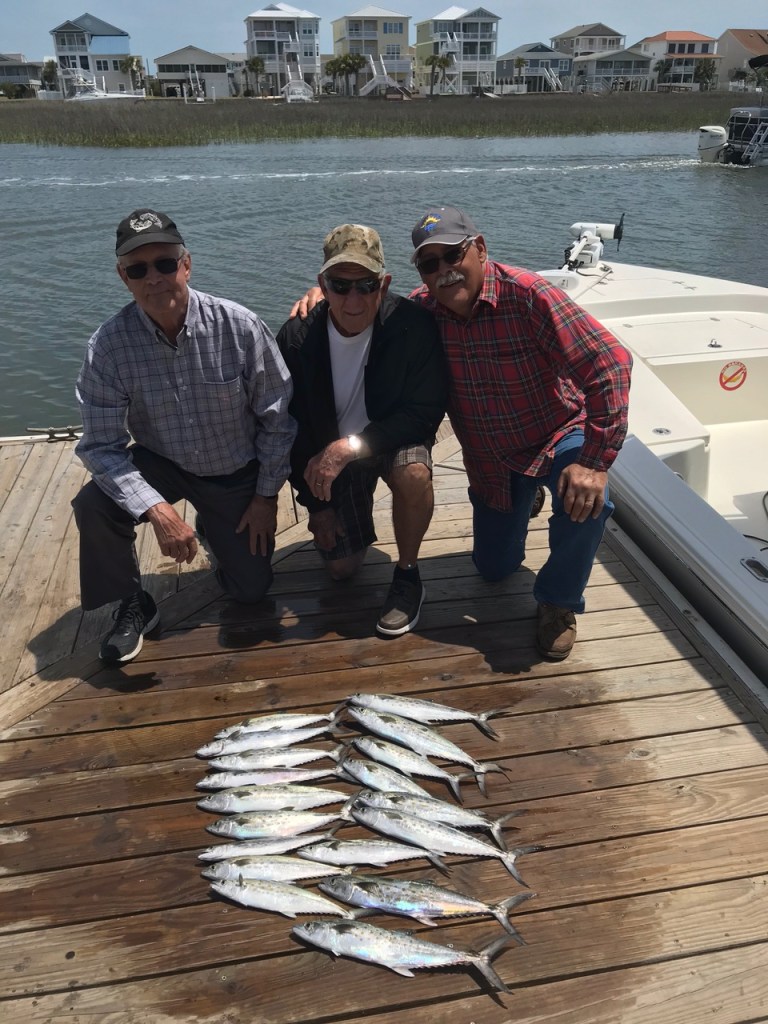
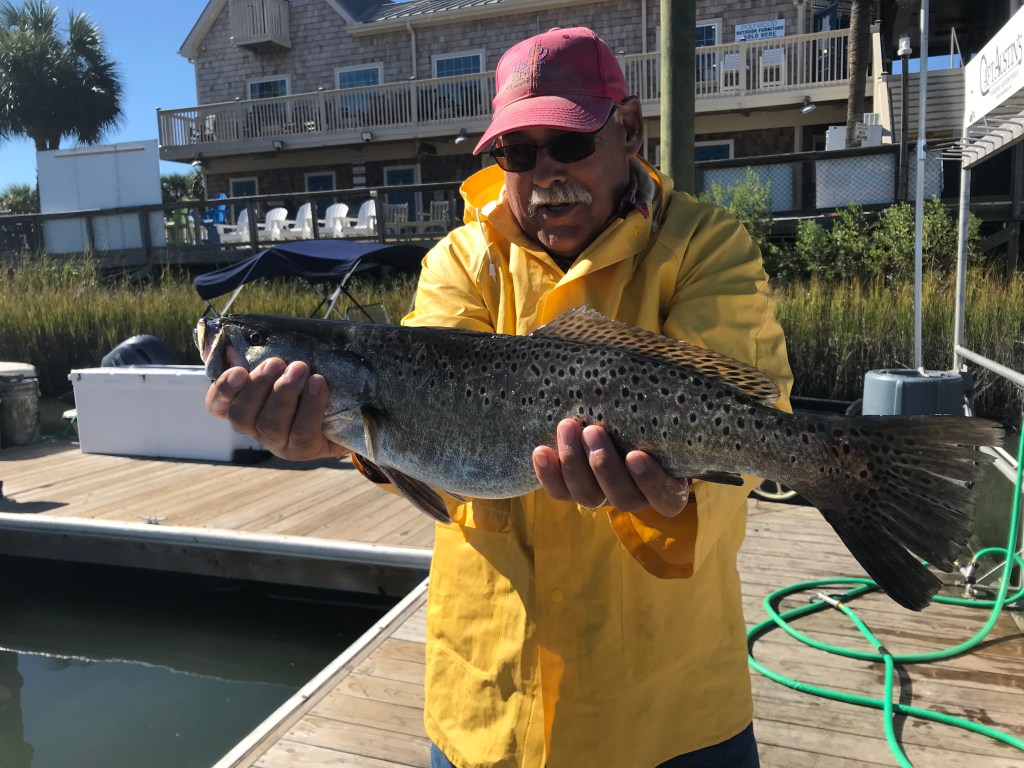
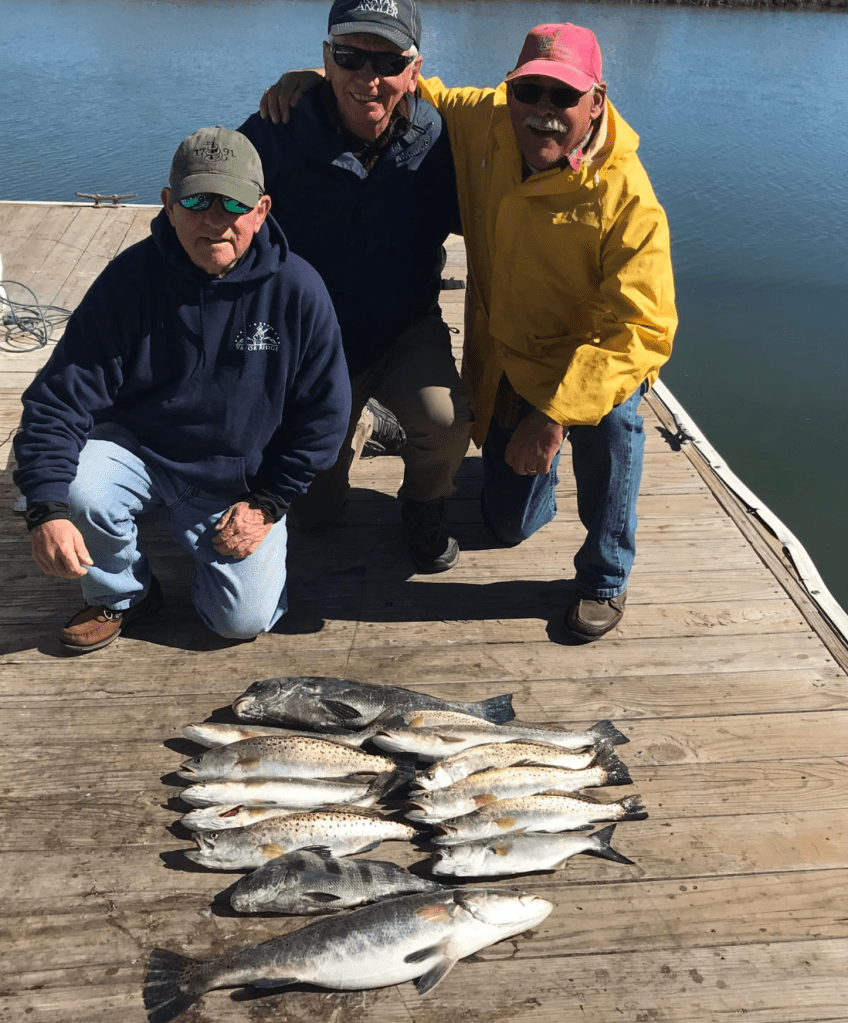
MOREHEAD CITY – The N.C. Department of Environmental Quality’s Division of Marine Fisheries will close all Coastal and Joint fishing waters in North Carolina to both commercial and recreational Spotted Seatrout harvest at 4 p.m. Friday, Feb. 6, 2026, due to widespread cold stun events.
Cold stuns are natural events that occur when there is a sudden drop in water temperature or prolonged periods of cold weather that makes the fish sluggish. Many fish will die from the cold. Others fall prey to birds and other predators. Studies suggest that cold stun events can have a significant impact on Spotted Seatrout populations.
The Division has confirmed significant Spotted Seatrout cold stun events in 10 waterbodies, from Hyde County to Pender County. The Division is still receiving and verifying more cold stun reports and collecting associated environmental data. These efforts will continue regardless of the closure so the Division can measure the magnitude of the cold stun event to evaluate how to protect the stock.
Amendment 1 to the N.C. Spotted Seatrout Fishery Management Plan specifies that if a significant cold stun event occurs, the Division of Marine Fisheries will close all Spotted Seatrout harvests through the spring.
The intent of the closure is to allow the surviving fish a chance to spawn in the spring before harvest reopens. Peak spawning occurs from May through July.
The Spotted Seatrout season will remain closed through June 30, when it will reopen by proclamation.
Commercial seafood dealers have until 3:30 p.m., Friday, Feb. 13, 2026, to sell, offer for sale, transport or otherwise dispose of any unfrozen Spotted Seatrout that remain in their possession from purchases made prior to the closure.
For more specifics on the closure in coastal waters, see Proclamation FF-12-2026.
The public should continue to report any cold stun events they see in coastal waters.
To report a cold stun event or for more information, contact Lucas Pensinger at 252-515-5638 or Lucas.Pensinger@deq.nc.gov.
Share / View as a webpage  Jan. 20, 2026 New “Lines of Communication” meetings scheduled for North Carolina MOREHEAD CITY – Itching to share your ideas on federal fisheries management? The North Carolina Department of Environmental Quality’s Division of Marine Fisheries encourages fishermen to attend one of four upcoming South Atlantic Fishery Management Council Lines of Communication meetings scheduled for North Carolina. Lines of Communication is a new council initiative to build relationships with fisheries stakeholders and provide an opportunity for mutual sharing of information. The meetings allow attendees to provide their perspectives with local council members, council staff and other fishery participants. The meetings will be held in-person along the South Atlantic coast. Jan. 20, 2026 New “Lines of Communication” meetings scheduled for North Carolina MOREHEAD CITY – Itching to share your ideas on federal fisheries management? The North Carolina Department of Environmental Quality’s Division of Marine Fisheries encourages fishermen to attend one of four upcoming South Atlantic Fishery Management Council Lines of Communication meetings scheduled for North Carolina. Lines of Communication is a new council initiative to build relationships with fisheries stakeholders and provide an opportunity for mutual sharing of information. The meetings allow attendees to provide their perspectives with local council members, council staff and other fishery participants. The meetings will be held in-person along the South Atlantic coast. North Carolina Lines meetings are scheduled as follows: Feb. 2, 6-8 p.m. Town Creek Community Center 6420 Ocean Highway East Winnabow, NC 28479 Feb. 3, 6-8 p.m. NC Division of Marine Fisheries Central District Office 5285 Highway 70 West Morehead City, NC 28557 Feb. 4, 6-8 p.m. Hatteras Civic Center 57688 NC- Hatteras Highway Hatteras, NC 27943 Feb. 5, 6-8 p.m. Virginia S. Tillett Community Center 950 Marshall C Collins Dr. Manteo, NC 27954 The South Atlantic Fishery Management Council is one of eight regional fishery management councils in the United States that manages fisheries in federal waters. The South Atlantic Council is responsible for the conservation and management of fishery resources in federal waters ranging from 3 to 200 miles off the coasts of North Carolina, South Carolina, Georgia and east Florida. It manages species such as Dolphin, Wahoo, mackerels, snapper and grouper. For More Information Contact: Patricia Smith Phone: 252-515-5500 Website: https://www.deq.nc.gov/dmf Facebook: https://www.facebook.com/NCMarineFisheries Instagram: https://www.instagram.com/NC_DMF Twitter: https://twitter.com/NC_DMF P.O. Box 769, 3441 Arendell St., Morehead City N.C. 28557 |
 Sea Trail Fishing Club