The following article was written by Phillip Gentry for Carolina Sportsman December 31, 2022.
Go shallow for chilly water redfish
Nothing speaks of cold water inshore fishing more profoundly than sneaking up on a tightly packed pod of redfish and attempting to pick them off one by one.
Until they mature and head out into the ocean, most redfish rarely range more than ½ mile throughout their juvenile life. That means those same places where you find redfish in the spring, summer, and fall will be the same places you’ll find them in the winter.
During winter forays, redfish don’t range into deep water holes, but spend more time in shallower water, and for good reason. First, all the bait is gone and dolphins that normally feed on mullet or menhaden are now feeding on redfish. Second, a dark, shallow muddy bottom will be warmer than the surrounding area.
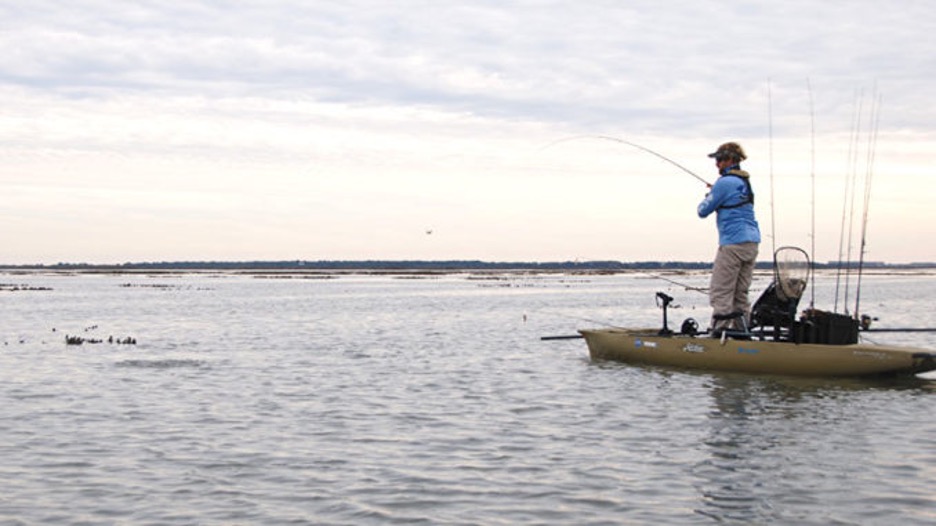
Anglers who can locate and access the most remote reaches of shallow water – too shallow for heavier boats to pass – have a distinct advantage.
Winter tides in the Carolinas tend not to be as wide-ranging as summer tides. So a good bet is to look for mid-tide flats to hold more fish, especially those areas having oyster mounds or sandbars between them and deeper water. With hard ground between you and deeper water, once you’ve located a school of fish, you should have them to yourself.
Keep it slow
Lures that have a lot of action without having to move it that fast are a good bet. The use of scented baits or at least applying some add-on scent often plays a big part in how redfish find your bait.
Mudflats in the winter are generally devoid of active life. So anything that moves naturally along the bottom tends to get noticed when blind casting for individual redfish. Fast twitching a jerkbait or topwater lure works well in warmer weather but will tend to spook already nervous winter fish.
Unless spooked, redfish schools may not range very far in colder water. But they’ll show a distinctive movement that can be determined by observant anglers who watch and wait for the right time to present a bait. If the movement of the school, which can number from 20, 30 to even 100 fish is too close and moving closer, allow the pod to pass by and then cast ahead of the fish and let them work to it or slowly move it back into the fish, being careful not to let the bait or even your line fall across the fish.
Phillip Gentry of Waterloo, S.C., is an avid outdoorsman and said if it swims, flies, hops or crawls, he’s usually not too far behind.
 Sea Trail Fishing Club