Category Archives: Education

Redfish and black drum on N.C. coast

March is great for redfish and black drum in Brunswick County

Brunswick County is North Carolina’s southernmost saltwater in North Carolina. The creeks and marshes in the southern part of the county are the first to wake up as spring arrives.

Usually, the red drum and black drum, plus a few hearty specks, get off to a strong bite when the water temps begin warming in the spring. This year spring begins on Sunday, March 20, a week after Daylight Savings Time begins. Fish still have the advantage, but the balance shifts a little more to fishermen.

Many years, winter begins losing its grip on Southern N.C. by late February with stretches of warm sunny days. This begins in earnest by early March and the water also begins to warm. It only takes a week or so and drum, both red and black, begin to feed more regularly and more aggressively. A few speckled trout may respond to this initial preview of spring. But the real stars are red and black drum.

Capt. Austin Kerr of Fellowship Charters (336-941-7292) in Ocean Isle Beach said this is when fishing becomes steadier. When the spring drum bite begins firing off, his phone begins to ring. It also makes fishermen more comfortable when the winter weather breaks and more sunny and warm days prevail.

Kerr fishes from the Shallotte River to Little River Inlet, just a few hundred yards across the state line in South Carolina. He said the fish get more active, but aren’t summer active yet. So he likes to fish the change of the tide for a few hours, when the current isn’t running strong. He believes water clarity is a key and checks the Shallotte River, Calabash River, Intracoastal Waterway, and the larger creeks off these for cleaner water.

“During this time, I concentrate on oyster beds and docks in the creeks and waterway and sometimes fish the jetties in Little River Inlet,” Kerr said. “Both drum eat pieces of shrimp, and red drum are more aggressive and will chase down mud minnows. We generally fish pieces of shrimp on jigheads, but switch to Carolina rigs to fish mud minnows.

“Red drum will also chase soft plastics,” Kerr said. “I like the D.O.A. 3- and 4-inch paddletails and fish them slowly on light jigheads. Most days they will bite these, but sometimes they get very particular about the color. I have everyone on the boat begin with a different color and keep changing them until we find a color they like that day. It may have been different the day before and may be different again the next day.”
https://www.carolinasportsman.com/fishing/inshore-fishing/black-drum-inshore-fishing/redfish-and-black-drum-on-n-c-coast/?utm_source=Carolina+Sportsman&utm_campaign=2e10a400bc-RSS_EMAIL_CAMPAIGN&utm_medium=email&utm_term=0_c41990a090-2e10a400bc-290292534

Better Fishing with 2 Bald Biologists – Springtime White Bass

Corey and Ben are joined by Kelsey Roberts, “The White Bass Biologist,” to dive into the exciting springtime spawning runs of white bass in North Carolina. Kelsey shares her knowledge on this beloved species, offering tips on the best locations and baits to use for a successful catch.

https://blubrry.com/ncwrc_better_fishing/143132939/springtime-white-bass/?sbe=1

Two Bald Biologists — Hail to the Chief: A Deep Dive into Fisheries Rules

Join Corey and Ben as they sit down with Christian Waters, Chief of Inland Fisheries, to explore the ins and outs of fisheries regulations. Why do these rules exist? Who do they impact? Are they even necessary? Tune in as they dive deep into the world of fisheries management. 

https://blubrry.com/ncwrc_better_fishing/141859381/hail-to-the-chief-a-deep-dive-into-fisheries-rules/?sbe=1

NC Marine Fisheries ask public to report cold stunned trout

Speckled trout are vulnerable to cold weather

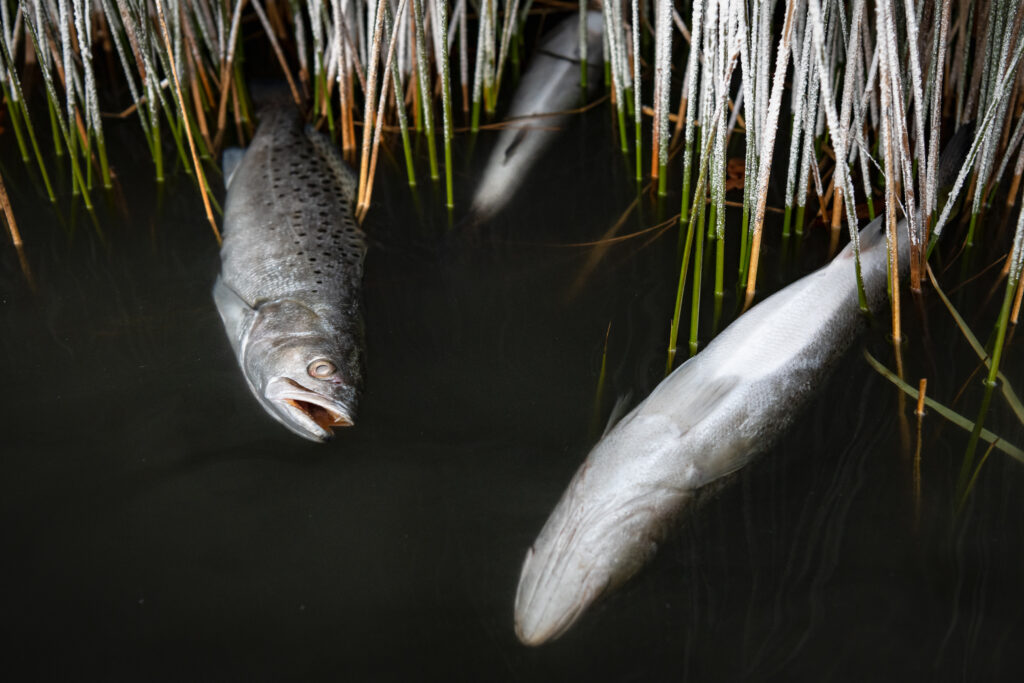
The N.C. Department of Environmental Quality’s Division of Marine Fisheries wants to remind the public to report any cold stunned spotted seatrout they may see in North Carolina coastal waters.

During the winter, spotted seatrout move to relatively shallow creeks and rivers, where they can be vulnerable to cold stun events. Cold stun events have the potential to occur when there is a sudden drop in temperature or during prolonged periods of cold weather, making fish so sluggish they can be harvested by hand. Many fish that are stunned die from the cold or fall prey to birds and other predators. Studies suggest that cold stun events can have a significant negative impact on spotted seatrout populations.

No significant cold stun events have been confirmed so far this season, but current weather conditions are suitable for a cold stun event to occur in coastal rivers and creeks.

Spotted seatrout cold stun events can be reported at any time to the N.C. Marine Patrol at 252-515-5507 or during regular business hours to the Division of Marine Fisheries spotted seatrout biologist Lucas Pensinger at 252-515-5638 or Lucas.Pensinger@deq.nc.gov. When reporting a spotted seatrout cold stun event, please provide the specific location, date, and time the cold stun was observed, along with your contact information.

The N.C. Spotted Seatrout Fishery Management Plan specifies that if a significant cold stun event occurs, the Division of Marine Fisheries will close all spotted seatrout harvest in the affected areas until June. A significant cold stun event is determined by 1) assessing the size and scope of the cold stun, and 2) evaluating water temperatures to determine if triggers of 5 C (41 F) for eight consecutive days or 3 C (37.4 F) during a 24-hour period are met. Data loggers are deployed statewide to continuously measure water temperatures in coastal rivers and creeks that are prone to cold stuns.

The intent of a harvest closure is to allow surviving fish a chance to spawn before harvest re-opens. Peak spotted seatrout spawning occurs from May to June.

https://www.carolinasportsman.com/fishing/inshore-fishing/speckled-trout/nc-marine-fisheries-ask-public-to-report-cold-stunned-trout/?utm_source=Carolina+Sportsman&utm_campaign=67e3e4b098-RSS_EMAIL_CAMPAIGN&utm_medium=email&utm_term=0_c41990a090-67e3e4b098-290292534

Y’all Ain’t From Around Here !

November 12, 2024

Our two bald biologists are joined by Assistant Fish Chief Rachael Hoch to discuss both the harmful effects and the fishing opportunities presented by aquatic nuisance species. Learn how these aquatic nuisance species threaten our native aquatic life and why it’s crucial to educate one another about not introducing animals into environments where they don’t belong. And remember—doing so could land you in a ‘blue light special.’

https://blubrry.com/ncwrc_better_fishing/137183045/you-aint-from-around-here/?sbe=1