Author Archives: Steve Pendergrass
News from Salt Strong
SALT STRONG INSIDER CLUB PRICE INCREASE (NEW MEMBERS ONLY!) https://www.saltstrong.com/fishing-tip/salt-strong-insider-club-price-increase/?utm_source=Isoft&utm_medium=Email-broadcast&utm_campaign=Insider-tip&utm_content=salt-strong-insider-club-price-increase&utm_term=insiders
Membership is not for everyone, but if it is for you, now is the time to avoid the 50% increase in the price of membership.
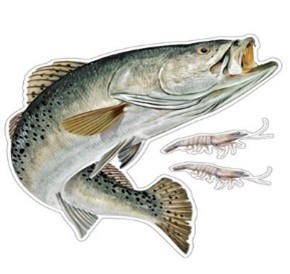
Digi Know ?
NCWRC and NCDMF seek comments
Wildlife Resources Commission & Marine Fisheries Commission Seek Comments on Proposed Temporary Rules The N.C. General Assembly passed Session Law 2023-137 (https://ncleg.gov/Sessions/2023/Bills/House/PDF/H600v8.pdf), Section 6 in the fall of 2023, requiring any person who recreationally harvests Red Drum, Flounder, Spotted Seatrout, Striped Bass, and Weakfish to report that harvest to the Division of Marine Fisheries. Additionally, anyone holding a commercial fishing license engaged in a commercial fishing operation is required to report all fish harvested to the Division of Marine Fisheries, regardless of sale. To implement these requirements, the N.C. Wildlife Resources Commission and the N.C. Marine Fisheries Commission are proposing temporary rules (https://www.deq.nc.gov/about/divisions/marine-fisheries/licenses-permits-and-leases/mandatory-harvest-reporting) for mandatory harvest reporting. To submit comments on the Wildlife Resources Commission’s proposed temporary rule, visit the NCWRC Proposed Regulations (https://www.ncwildlife.org/Proposed-Regulations) webpage. To submit comments on the Marine Fisheries Commission’s proposed temporary rules, visit the NCDMF Public Comments (https://www.deq.nc.gov/mandatory-reporting-public-comment) webpage. A combined agency public hearing will be held virtually on May 1, 2024 at 6 p.m. Pre-registration is required. Register Here (https://ncwildlife-org.zoomgov.com/webinar/register/WN_3nf_6aV8TseZYB_5Q215vQ#/registration) Public Comment Period Ends – May 20, 2024 at 5 p.m. |
April 2024 Spanish Mackerel Pier Fishing Tournament
Shout out to the Sea Trails Fishing Club with their first Spanish Mackerel today Congratulations to David Cannon who took 1st place with a 16.75” fish and Jeff Williams took 2nd with 15.75” fish. https://www.facebook.com/profile.php?id=100068663840766

April Run of Shad in the Cape Fear River
Our friends at Carolina Sportsman have published information about this Spring Shad Run up the River. https://www.carolinasportsman.com/fishing/freshwater-fishing/shad/smacking-cape-fear-river-shad/?utm_source=Carolina+Sportsman&utm_campaign=6cf1c2af86-RSS_EMAIL_CAMPAIGN&utm_medium=email&utm_term=0_c41990a090-6cf1c2af86-290292534
Both the American & Hickory Shad might be caught.
https://www.youtube.com/watch?v=BOtiy9KMHtE
https://en.wikipedia.org/wiki/American_shad

Mono vs. Fluoro for your In Shore Leader
I asked MicroSoft Copilot AI “What is the difference between nylon mono and fluorocarbon leader?”

Nylon Monofilament (Mono):
- Elasticity: Mono is more elastic than fluorocarbon, making it a good shock absorber. When a fish strikes aggressively, the stretch in mono helps prevent tackle failure.
- Knots: It’s easy to tie knots with mono.
- Buoyancy: Mono floats on the water’s surface.
- Visibility: Mono is more visible to fish due to its buoyancy and transparency.
- Strength: For a given diameter, mono is weaker compared to fluorocarbon.
- Cost: Mono is less expensive than fluorocarbon.
- Density: Mono is less dense than fluorocarbon.
- Use Cases: Mono is suitable for casting lures around structures, where fish aren’t too “leader shy.” It’s also great for fish like barramundi and mulloway, where stretch helps during aggressive strikes and head shakes.
Fluorocarbon:
- Stiffness: Fluorocarbon is stiffer than mono.
- Stretch: It has minimal stretch, which is advantageous for deep water jigging and bait fishing.
- Abrasion Resistance: Fluorocarbon is highly abrasion-resistant.
- Diameter: Fluorocarbon has a thinner diameter compared to nylon mono of the same breaking strain.
- Density: It sinks in water.
- Visibility: Fluorocarbon is less visible to fish.
- Knot Strength: Fluorocarbon has better knot strength.
- Use Cases: Use fluorocarbon for deep water jigging, bait fishing, and finesse luring with small soft plastics. It imparts action on jigs and lures, and its minimal stretch helps prevent fish from reaching bottom structures.
However, independent testing at Salt Strong (https://www.saltstrong.com/fishing-tip/mono-vs-fluoro-insider-only/?&utm_content=weekly-newsletter-4-7-24&utm_term=&utm_medium=Email-broadcast&utm_campaign=Newsletter&utm_source=Isoft) has a different opinion supported with data. (NOTE: only Salt Strong Insiders will be able to view this URL).
Which do you prefer for your leaders, mono or fluoro, and why?
Tight line.

You must be logged in to post a comment.