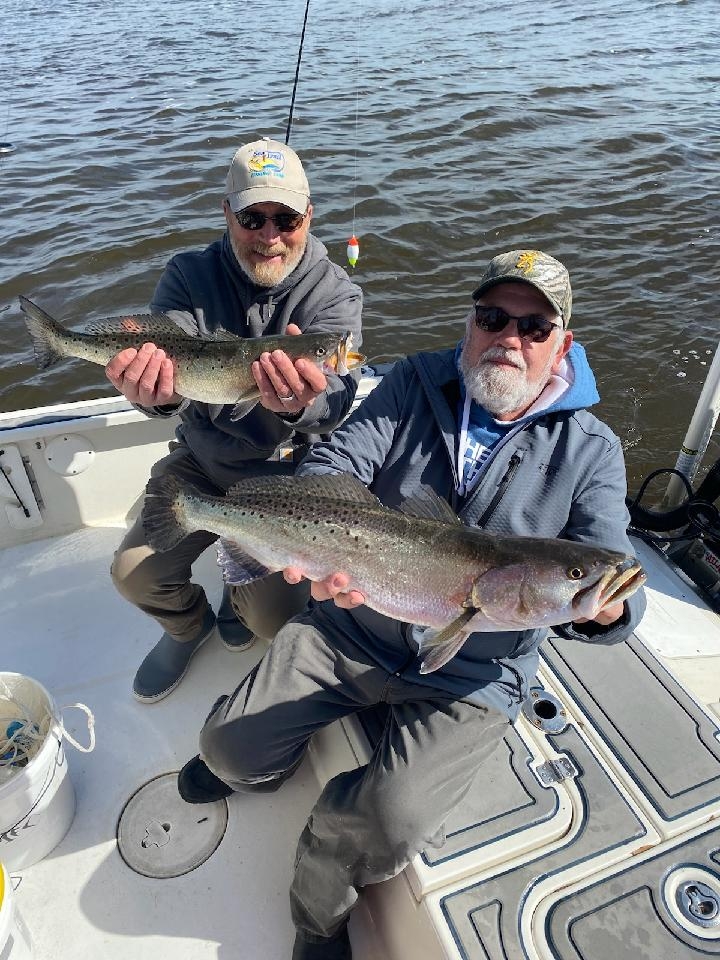
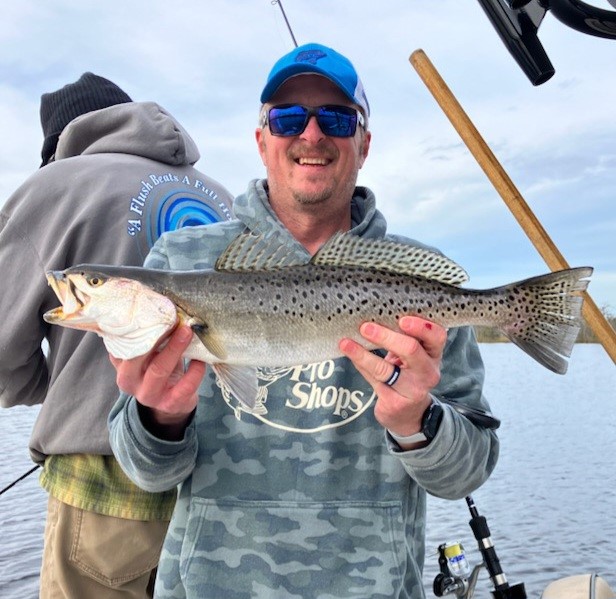
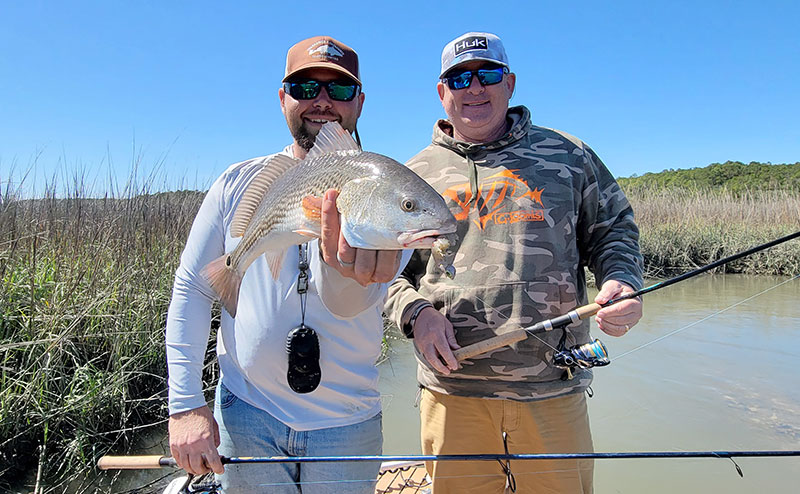
Club Members Dwain Benton and Roy Coffey holding some of their catch from this past Saturday. They were on a charter with Captain Tripp Hooks. The larger fish statistics are 7 lb. 15 oz, 28″ and the smaller fish is 23-1/2″. They were both caught at the jetties on live shrimp. This is two of 14 trout, several reds, and at least one black drum caught.
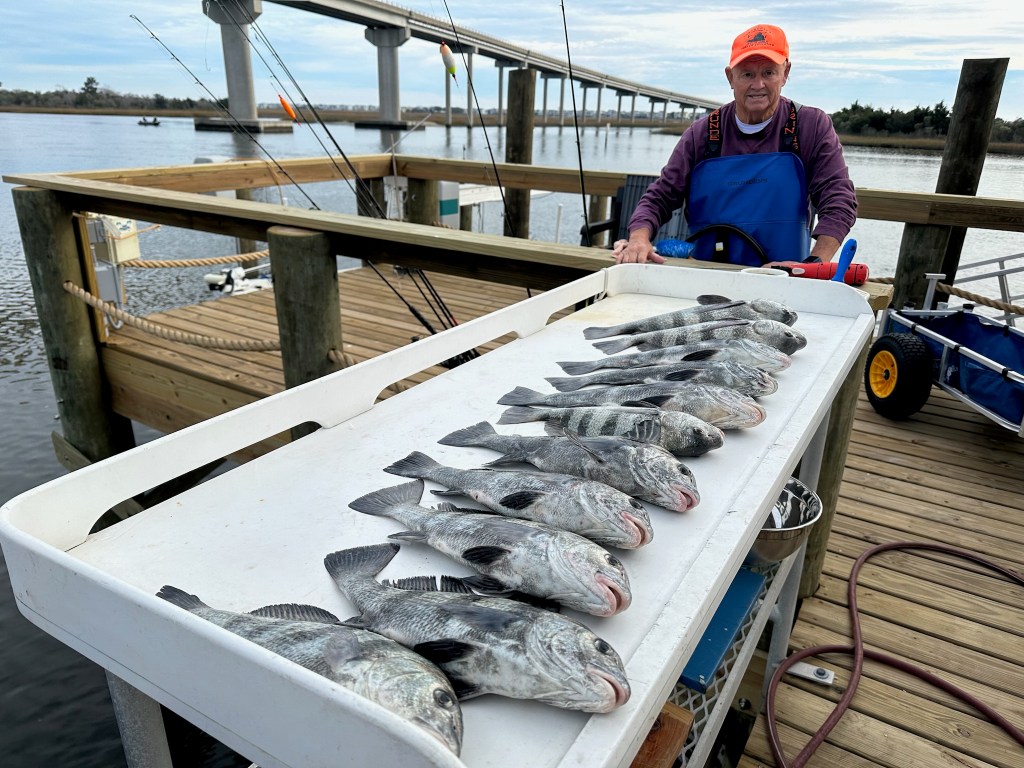
Sailing out of Sunset Beach chasing Black Drum on January 29th
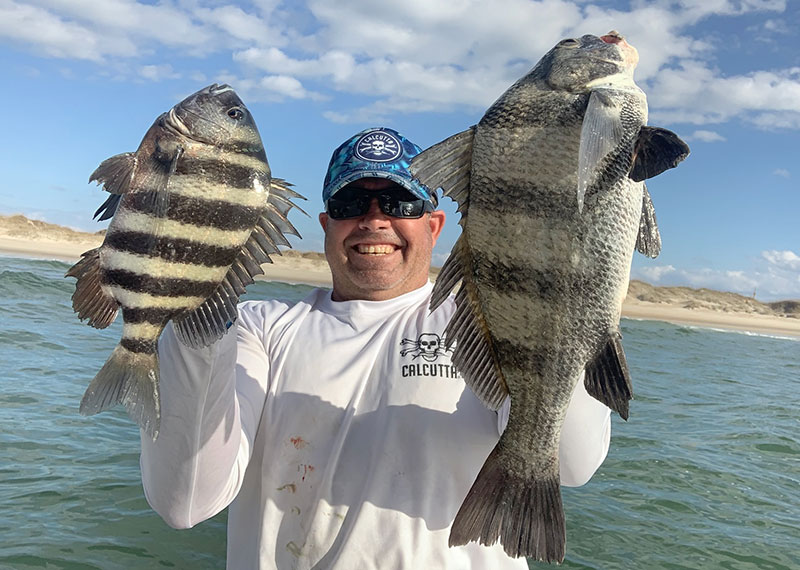
A little further north at Cape Lookout, courtesy of The Carolina Sportsman.
Black drum and sheepshead run together in Cape Lookout area
February’s hot fishing in the Cape Lookout area is made up in large part by black drum and sheepshead, and anglers can expect to catch both species in similar areas.
For Capt. Noah Lynk of Noah’s Ark Charters (252-342-6911), this month brings big changes.
“We have a big changeup in February. The gray trout will move out in big numbers, and lots of black drum and sheepshead will be available and biting,” said Lynk.
Both species are structure-oriented fish. Copy & Paste the URL below in your browser for more details.
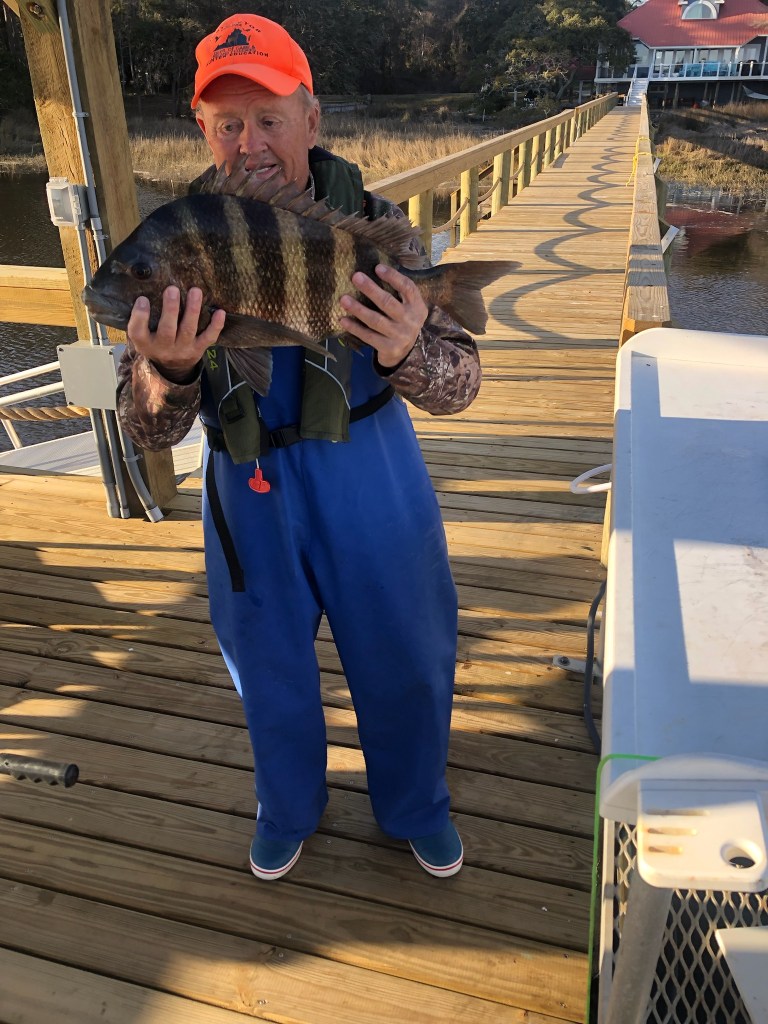
Here is a 4-pounder caught by our member Terry Dremmel’s friend Tom Mears. It last Thursday (January 18, 2024) in the Intracoastal Waterway in South Brunswick County in 4 ft of water using a coffee-colored paddle tail plastic with darker brown spots on it. Tom and friends have been doing very well with that lure that past several weeks.
By January, redfish in South Carolina’s lowcountry are gathered up in huge schools, where they patrol the skinniest water they can find. They do this for two reasons: to stay away from flipper as much as possible, and to stay in the sunlight for the warmth it offers.
Many anglers troll up and down main waterways, keeping tabs on these schools and offering them lures as they go. But for Capt. Stephen Flook of Unashamed Adventures, this is the time to get off the main channels. Instead, he parks his boat at the mouth of secondary creeks, many of which are blocked from boats by the presence of oyster mounds.
“I’ll just get into the mouth as far as I can, anchor down, then cast back into those tiny, secondary creeks,” he said.
His favorite spots are the creeks that hold a foot or two of water during dead low tide.
“If it’s deep enough at dead low for redfish to stay, that’s what they’d prefer to do. That keeps them safe from dolphins because it’s not deep enough for the dolphins. Plus, the entrances to these tiny creeks are usually blocked, at least partially, by oyster mounds. So even the smallest of boats are locked out,” he said.
But they don’t stop Flook or his clients from firing a variety of Z-Man soft plastics into those creeks.
“When targeting the big schools on the main waterway, you have to be careful and precise where you cast. That’s not a concern in these tiny creeks because if you spook the fish, they don’t really have anywhere to go. They aren’t going to competely leave the creek because it’s their safest spot at low tide,” he said.
Some of these creeks are so small that you may have room for casts in only one or two tiny areas.
“If you put it in front of a redfish, it’s usually going to pick it up. Maybe not on the very first cast, but they’ll pick it up pretty quickly,” said Flook (864-430-8830) or https://fishingcharterschs.com/
And if they don’t, he’ll pull up anchor, find another tiny creek, and try again.
“Sometimes I’ll even get out and walk into these creeks on foot if it’s possible,” he said.
Flook said anglers should make a cast and work the lure back slowly, but not so slowly that your lure hangs up on the bottom. A twitch here and there is often enough to trigger a strike.
May 7, 2024. The cost is $150 per person and includes the tip. Contact Chuck Fisher of Little River, South Carolina by emailing him at captchuckfisher@verizon.net for more information.


 Sea Trail Fishing Club
You must be logged in to post a comment.